

Scotland’s genetic scorecard covers marine wildlife and is being used internationally. Published assessments identify conservation risks, but population persistence and wider adoption do not establish recovery.
Tracking genetic risks across land and sea
The Scottish genetic scorecard now covers marine wildlife and is being used internationally to organise evidence about conservation risks. The Scottish Government highlighted those developments on 22 October 2026, although marine coverage had already been reported in December 2025. Its marine wildlife assessments show why tracking genetic diversity matters: populations can remain present while losing numbers or locally adapted variation.
The development offers a broader framework for genetic diversity monitoring. It does not, by itself, demonstrate that threatened wildlife has recovered.
What the October announcement changes
The Scottish Government’s October announcement describes work developed by Royal Botanic Garden Edinburgh, the University of Edinburgh and NatureScot. It names fish, dolphins, porpoises, sharks, skate and birds among the marine groups covered.
The chronology matters. First published in 2020, the scorecard was expanded through a project described by SEFARI on 17 January 2025. Its objectives included adding marine species, updating terrestrial assessments after five years and aligning reporting with the updated Global Biodiversity Framework.
NatureScot then reported the broader coverage on 12 December 2025. That account included a wider selection of terrestrial animals, plants and fungi, alongside marine species. SEFARI Gateway funded the work coordinated by the three institutions.
October’s announcement therefore highlights expansion and international uptake, rather than marking the first arrival of marine coverage. The individual assessments provide the detail needed to understand what those developments mean for conservation.
How the Scottish genetic scorecard assesses risk
The version 2.0 methodology, dated 25 February 2026, distinguishes genetic variability from genetic distinctiveness. Variability concerns the different genetic types present. Distinctiveness concerns differences between lineages, including geographically separated populations.
Both matter because genetic variation supports adaptation to local conditions and environmental change. Losing a population from one area can remove variation associated with that place, even when the species survives elsewhere.
The Scottish genetic scorecard examines three mechanisms:
- Genetic erosion: loss of variation following demographic decline.
- Genetic swamping: undesirable replacement associated with hybridisation, or breeding between genetically different groups.
- Genetic stasis: restricted regeneration or turnover that impedes evolutionary change.
It then assesses whether conservation action sufficiently mitigates those risks. This separates the condition of a species from the adequacy of the response. Neither judgement is a certificate of recovery.
Assessors use direct genetic information where it exists. Where it does not, demographic evidence and structured expert opinion can support an assessment. This makes the approach usable without prior genetic knowledge for every species, but the strength and completeness of the evidence remain important.
For Global Biodiversity Framework Target 4, the methodology uses two reporting measures. One is the proportion of populations exceeding an effective population size of 500. The other is the proportion of populations maintained. These act as proxies for diversity within populations and among populations respectively; they are not direct measurements of every genetic variant.
The framework also distinguishes conservation in the wild, collections such as seed banks and zoos, and managed systems within native ranges. Wild conservation allows continuing adaptation. Collections safeguard material, but can constrain adaptation to conditions in the wild. Genetic diversity monitoring therefore needs to consider how populations are conserved, as well as whether material survives.

What mussels and sandeels reveal about marine genetic health
Two published marine wildlife assessments show how these distinctions work. NatureScot rates blue mussels at moderate genetic risk in Scotland and the UK, with partially effective mitigation. Mussel beds support coastal food webs, stabilise sediment and contribute to water quality and nutrient cycling. They also provide food for people.
The blue mussel assessment identifies long-term bed decline, fishing damage, pollution, non-native competitors and infrastructure disturbance. Climate pressures include changing salinity, storms, marine heatwaves and ocean acidification. Declining populations can lose locally adapted diversity despite the species’ capacity to recover under suitable conditions.
All 12 defined Scottish populations and all 23 UK populations were recorded as maintained between 2000 and 2025. That means those populations continued to exist, not that their abundance or bed extent remained stable. Effective-population-size proportions were not assessed. The account also reports no comprehensive genetic conservation programme outside the wild for wild populations.
The opening sandeel assessment identifies serious genetic risk and partially effective mitigation in Scotland and the UK. Sandeels burrow in sandy seabeds and provide important prey for marine wildlife.
Limited mixing between spawning grounds can create genetic differentiation that broad genome-wide similarity obscures. In other words, apparent overall similarity does not exclude important local differences.
NatureScot links pressures to historical overexploitation, highly variable recruitment, sea temperature and zooplankton availability. Recruitment means the arrival of young fish into a population. Warming can disrupt the timing between larval development and peak prey availability. Offshore development, sediment changes and underwater noise are additional potential pressures.
All four defined Scottish and all five UK sandeel populations were recorded as maintained between 2000 and 2025. Yet the assessment also describes contractions, uncertain recovery and possible losses of locally adaptive variants.
It records commercial fishing closures introduced in 2024 in Scottish waters and English North Sea waters, alongside four Nature Conservation Marine Protected Areas protecting sandeels. The assessment says the effectiveness of newer measures will remain unknown for several years, while climate pressures continue. These are reported conservation responses, not evidence that recovery has already followed.
Conservation responses for ash trees and wildcats
Terrestrial examples show why different genetic risks require different responses. In its December 2025 account of the expanded scorecard, NatureScot describes European ash genetic health as serious.
It identifies natural regeneration as the most effective route towards long-term adaptation to ash dieback through natural selection. The emphasis is on allowing future generations to develop, rather than simply retaining existing trees.
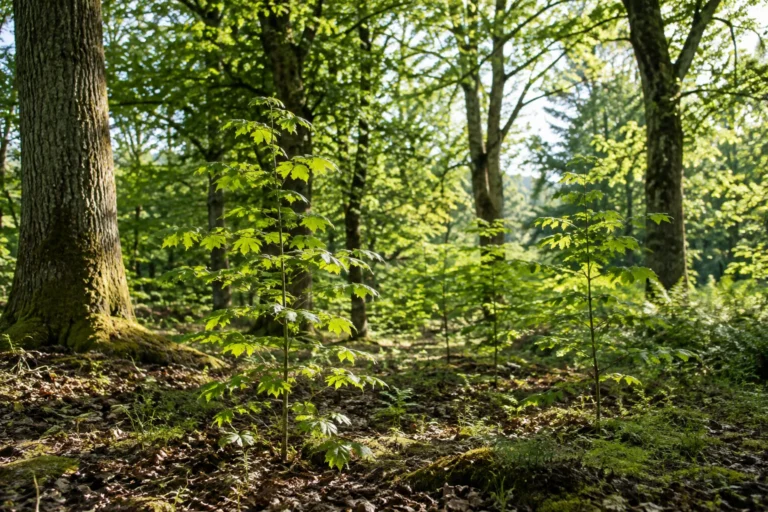
Reported supporting measures include deer control, breeding for disease tolerance and movement controls intended to prevent emerald ash borer arriving. The account also identifies Gene Conservation Units. These measures address different pressures, but their inclusion does not establish that ash recovery has been secured.
For Scottish wildcats, NatureScot links hybridisation with domestic cats to low wildcat numbers following persecution and habitat loss. Reported responses include conservation breeding, releases in Badenoch and Strathspey, threat reduction and community involvement.
This is a different genetic problem from the loss of ash through disease. The wildcat response addresses both the remaining population and the conditions that contributed to its decline.
Scots pine provides a further contrast. NatureScot describes it as at moderate risk from pathogens, climate change and poor regeneration. Across these examples, the Scottish genetic scorecard connects the mechanism of risk with the conservation response. The December account describes assessments and measures, rather than newly measured October 2026 recovery outcomes.
International use and the site-based GenDivA trial
The Scottish Government’s 22 October 2026 announcement reports use of the approach for species management in South Africa. It also describes a joint project with the University of Benghazi in Libya.
ConGen Africa’s Isa-Rita Russo describes the scorecard as a practical addition to wildlife-management guidelines. That is an attributed practitioner account of its usefulness, rather than an independently measured conservation outcome.
Professor Tarek Mukassabi of the University of Benghazi says the approach helped organise scattered Libyan biodiversity literature. It also guided research towards a national database. This describes a contribution to organising knowledge; it does not establish that a completed national database has been independently verified.
The announcement separately reports development of a site-based version with farmers and land managers in Scotland, Libya, Mexico and Australia. This changes the focus from assessing a species to considering genetic conservation at a particular site.
Mukassabi describes a first Libyan trial of the site-based GenDivA approach involving a rare native plant of the south-eastern Mediterranean. He undertook that work while collaborating with NatureScot on development.
The announcement does not identify the plant or provide numerical conservation outcomes. The distinction is important: the international story concerns adoption, development and practical use. It does not show that every trial has produced population growth or retained all genetic variation.
How the Scottish work connects with UK biodiversity reporting
The wider UK indicator helps explain what genetic diversity monitoring can establish. Effective population size differs from a census headcount and is typically much smaller. It reflects the population’s genetic contribution rather than simply the number of animals or plants counted.
Where all adults are counted but species-specific information is unavailable, JNCC uses a rule-of-thumb estimate of 10% of census size. Different fractions apply where existing knowledge supports them.
JNCC’s 2025 genetic-diversity indicator covers 43 species. It calculates the proportion of populations above an effective size of 500 for each species, then averages those proportions. The resulting figure is 0.64, or 64%.
This is not a finding that 64% of all UK wildlife is genetically healthy. It is a specific calculation across the assessed species. Evidence compilation includes expert elicitation, focused workshops and published and unpublished information.
JNCC labels the indicator an official statistic in development. There are insufficient data points to assess change, and it plans to address gaps and broaden species coverage. The indicator supports Global Biodiversity Framework Goal A and Target 4.
The Scottish genetic scorecard helps organise risk evidence and conservation responses within that broader effort. For readers examining a species assessment, the useful next step is to check the risk judgement, mitigation assessment and underlying evidence separately. Continued presence, management activity and demonstrated recovery answer different questions.
Frequently asked questions
Was marine coverage first announced in October 2026?
No. NatureScot described marine inclusion on 12 December 2025. The Scottish Government’s announcement on 22 October 2026 highlighted that coverage alongside international use.
What does the Scottish genetic scorecard assess?
It assesses genetic erosion associated with population decline, genetic swamping associated with hybridisation, and genetic stasis caused by restricted regeneration or turnover. It also assesses whether conservation measures sufficiently reduce those risks.
Does every assessment require DNA data?
No. Assessments can combine available genetic evidence with demographic information and structured expert opinion. Their conclusions therefore depend on the evidence available for each species.
What do the marine wildlife assessments say about mussels and sandeels?
NatureScot assesses blue mussels as facing moderate genetic risk. Its opening sandeel assessment identifies serious genetic risk. Both assessments describe mitigation as partially effective in Scotland and the UK.
Does a maintained population mean wildlife has recovered?
No. The measure records the continued existence of a defined population. It does not establish stable abundance, complete retention of genetic variation or recovery.
How can conservation help ash trees and Scottish wildcats?
NatureScot identifies natural regeneration and supporting measures as important for ash adaptation to disease. Reported wildcat responses include conservation breeding, releases, threat reduction and community involvement.
Where is the Scottish approach being used internationally?
The Scottish Government’s 22 October 2026 announcement reports species-management use in South Africa and work with the University of Benghazi in Libya. It also describes site-based development involving Scotland, Libya, Mexico and Australia, rather than demonstrated population recovery.
Does the UK’s 64% figure mean most wildlife is genetically healthy?
No. JNCC’s 2025 figure averages species-level proportions of populations above an effective population size of 500 across 43 assessed species. It does not describe all UK wildlife, and there are insufficient data points to assess change.