
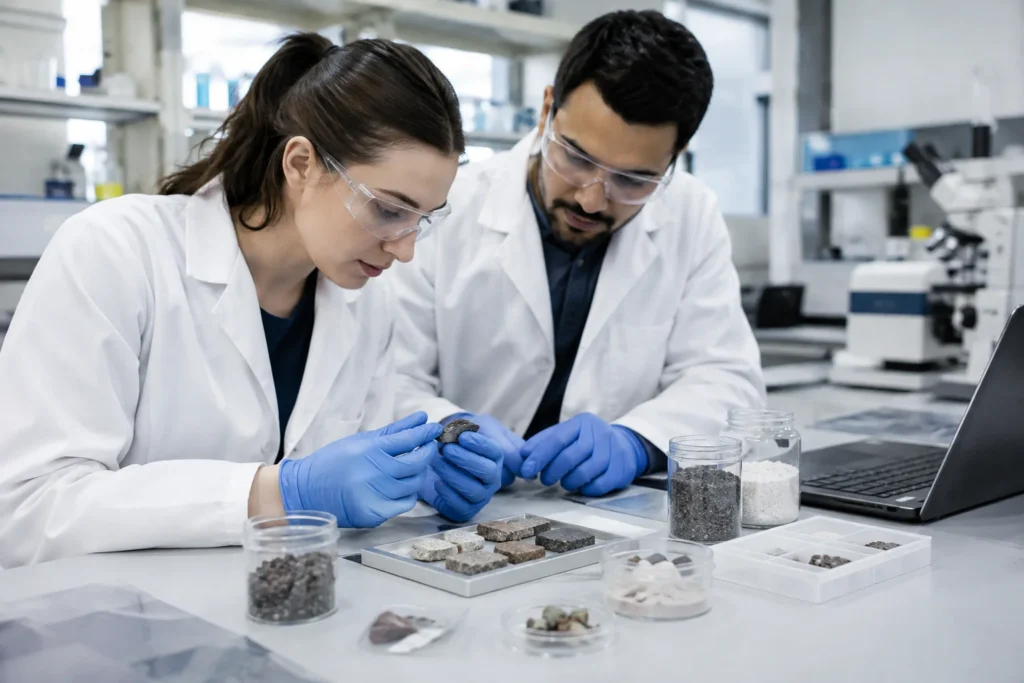
UKRI has announced £12.8 million for four national materials networks and nine industry–academic partnerships. The funding supports research and collaboration, not completed commercial results.
What the funding announcement means
UK materials networks and partnerships will receive £12.8 million to connect scientists and businesses and support research addressing industrial challenges. UKRI’s announcement on 22 October 2026 covers four national coordination networks and nine research partnerships. It funds collaboration and development, rather than demonstrating completed commercial products or economic returns.
The awards sit within the government-funded National Materials Innovation Programme, delivered by the Engineering and Physical Sciences Research Council (EPSRC) and Innovate UK. The distinction between networking and research funding matters: the two strands have different purposes and participation arrangements.
What the £12.8 million investment supports
According to UKRI’s funding announcement, participating businesses will contribute over £11 million in cash and in-kind support alongside the grant funding. This is not a cash-only total, nor should it be confused with the original competition’s cash-matching rule.
Materials networks and partnerships: different roles
The four Network Pluses focus on connecting communities and expertise. The nine Materials Innovation Partnerships bring academic and business researchers together to design and deliver research. Their subjects range from consumer products and packaging to metals, hydrogen storage and radio-frequency materials.
Queen’s University Belfast leads two partnerships, covering rare-earth fluorides and low-carbon calcium aluminate binders. Edinburgh leads Designed STABLE; Bristol leads work on hydrogen chemical storage; and Exeter leads CARN. These project names identify distinct awards, not a single research approach.
The remaining partnerships cover silicone-free consumer care at Sheffield, scrap steel and aluminium at Coventry, RESONANT radio-frequency materials at Queen Mary, and My-Pack mycelium packaging at Nottingham. Together, they show the breadth of the announcement without establishing how far any individual technology has progressed.
The original partnership competition sought collaborative fundamental research responding to industrial challenges. It aimed to accelerate movement towards industrial application and develop new or improved materials solutions. Applicants needed at least one year of established collaboration, with stronger evidence expected for larger requests. EPSRC particularly encouraged small and medium-sized enterprises (SMEs), either as the main business partner or within a consortium.
That call closed on 14 May 2026 and specified a 1 October 2026 start. Awards could last up to three and a half years. Terms included a minimum £250,000 EPSRC award, support at 80% of full economic cost and business cash contributions matching or exceeding EPSRC funding.
Its advertised £7.5 million fund and ambition to support at least four projects describe the application stage. They should not be treated as a financial breakdown of the nine partnerships subsequently announced.
How the national materials networks will work
The national materials networks are intended to address fragmentation: useful expertise can exist in different research communities and industries without being readily connected. Their role includes improving awareness of UK capabilities and making relevant knowledge easier to find.
The coordination-network funding call required each network to work with Innovate UK Business Connect. It sought participation across the value chain, bringing together research and industrial stakeholders rather than limiting activity to universities.
Its objectives included building cross-sector communities and lowering barriers to engagement by people outside academia. Networks were also expected to identify obstacles to investment and translation, meaning the movement of research towards practical use. Pre-competitive collaboration allows participants to explore shared research problems before competing through particular products or services.
Where appropriate, the scheme permitted initial testing, new collaborations and policy development. These activities can establish questions and evidence for later work; they are not equivalent to a commercially demonstrated product.
The call allowed flexible funding of up to 50% of eligible project costs. Applicants had to explain allocation arrangements, including transparent competition where appropriate, alongside capacity building, monitoring, reporting and governance. This provision does not establish that every participant can obtain a grant.
The historical competition closed on 27 May 2026, with a specified grant start of 1 October 2026. Its maximum full economic cost was £1.38 million per network, with EPSRC funding 80%. These were competition terms, not a substitute for individual award figures.
The intended connections also differ by field. Healthcare coordination includes biocompatible materials and bioelectronics, with clinicians and regulators involved. Electronics coordination links power electronics, quantum technologies and telecommunications. As at 24 October 2026, the published arrangements described here did not establish one membership process or funding deadline covering all four networks.
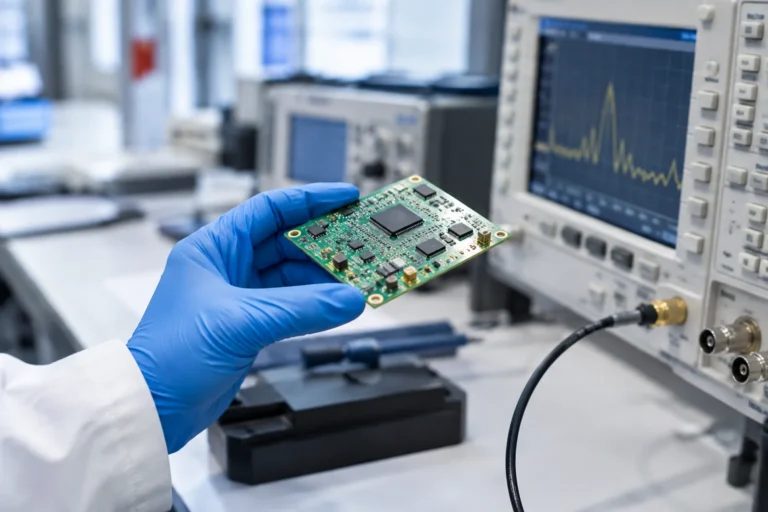
Connecting energy, healthcare and electronics expertise
Surrey leads the Electrochemical Entrepreneurship Network Plus, connecting energy-materials communities and supporting translation and the reduction of development risks. The university describes a £1.4 million national initiative intended to help promising energy materials move from university laboratories towards commercial use. That is its intended direction, not a reported commercial outcome.
Manchester Metropolitan University leads Healthcare Interfaces Network+. It brings together researchers, clinicians, businesses, regulators, policymakers and patient groups. This gives the UK-wide programme a documented Manchester institutional connection, but does not establish local investment totals or employment gains.
Glasgow leads the Responsible and Resilient Electronic and Electromagnetic Materials Network+, known as RaRE. Its project information, checked on 24 October 2026, lists activity for 2026–2030 and £1,103,683 in EPSRC funding. Partners include Loughborough, Oxford, Southampton, CSA Catapult and more than 50 industry and research partners.
Led by Dr Mahmoud Wagih, RaRE addresses a stated divide between materials research and electronics design. These communities can work separately and describe materials differently, making the connection between discovery and engineering an explicit part of the network’s purpose.
Its five themes are reproducible materials discovery, materials-first supply-chain resilience, scalable process development, modelling across scales and design for circularity. These link how materials are discovered with how they could be manufactured, used and eventually recovered or reused.
RaRE documents community-led special-interest groups organised around material families. It also describes flexible support for seed projects, secondments, placements and early-career researcher training. The Deep Tech Innovation Centre co-leads supply-chain resilience, public engagement and policy engagement.
These are more concrete participation mechanisms than a general promise to connect researchers. However, the descriptions do not themselves establish an open application window. The distinction matters for businesses considering involvement: planned activities explain the network’s approach, while current entry arrangements require the relevant network’s own information.
Sustainable coatings and circular manufacturing
Surfaces for a Sustainable Future is led by Newcastle and Northumbria universities with Sunderland Software City. Newcastle’s announcement dated 22 October 2026 reports 20 project partners and describes a national platform connecting several disciplines.
Those fields include coating chemistry, surface engineering, tribology, corrosion science, digital materials and sustainable manufacturing. Tribology concerns friction, wear and lubrication. Bringing these areas together connects the chemistry of a coating with how a surface behaves during use.
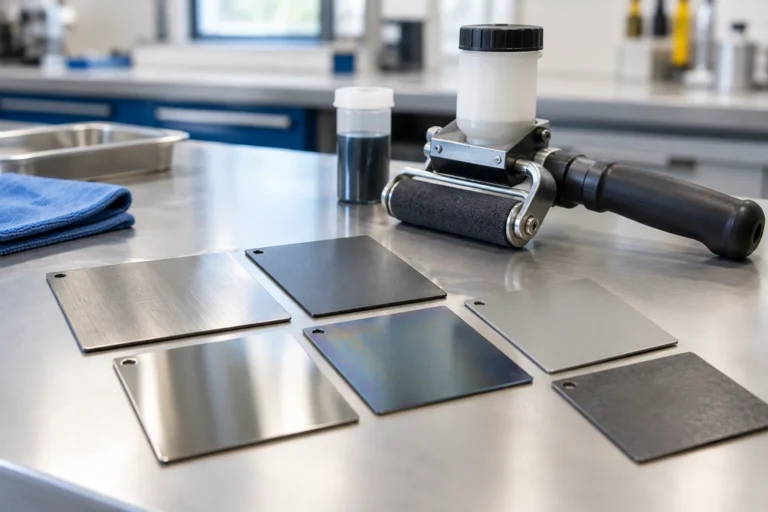
The network intends to develop alternatives to hazardous legacy coating chemistries and promote lower-energy manufacturing. It also plans to investigate coatings designed for repair, reuse or recycling. These are research objectives; the announcement does not demonstrate achieved energy savings or completed environmental improvements.
Planned digital methods include AI-assisted formulation, digital twins of surfaces and interfaces, and automated experimentation. A digital twin is a digital representation used to study a physical system. Here, these methods form part of the proposed research approach rather than reported completed achievements.
The delivery plans include skills programmes, industrial secondments and training for early-career researchers, technicians and industry practitioners. They also identify underrepresented groups among the intended participants.
Flexible funding is intended to support collaborations, feasibility studies and SME access to specialist facilities and expertise. That combines technical investigation with skills and access, but does not amount to a universal offer of funding or facilities. Information checked on 24 October 2026 describes these mechanisms without establishing that every activity is already accepting applications.
Programme rollout and a separate business research competition
The National Materials Innovation Programme overview gives a 2026–2030 duration, ending in March 2030. It places advanced materials within the Advanced Manufacturing Sector Plan and builds on the Henry Royce Institute’s January 2025 strategy, developed with input from over 2,000 experts.
The October announcement follows a different funding stage. On 3 September 2026, UKRI announced £2 million for 23 feasibility studies, described as the programme’s first supported projects. Those studies assess technical and commercial potential and build evidence for further development.
Examples include M-Spin exploring a material intended to improve green hydrogen production and Bounce-Biomedical exploring a biodegradable knee implant. They illustrate feasibility research, not commercial adoption or outcomes produced by the October network awards.
A separate collaborative industrial research competition opened on 1 September 2026. Information checked on 24 October 2026 lists its closing date as 28 October 2026 at 11:00am UK time. Its themes are future healthcare, structural materials, power electronics and connectivity, and metamaterials and metasurfaces.
The industrial research competition requirements include a named end user and a clear sector and application opportunity for later adoption. Applicants must explain anticipated improvements in performance, functionality, productivity or sustainability. Projects focused solely on enabling areas such as policy, skills or relationships fall outside its scope.
These distinctions prevent separate programme strands from being mistaken for one open funding offer. Materials networks and partnerships support connections and research; feasibility studies explore potential; the industrial competition has its own application requirements.
The awards therefore mark investment in research capacity and collaboration, not proof of industrial deployment, new jobs or financial returns. For a relevant next step, consult the appropriate official network or competition page for its documented participation arrangements and current status.
Frequently asked questions
What did UKRI announce on 22 October 2026?
UKRI announced £12.8 million for four national Network Pluses and nine Materials Innovation Partnerships within the National Materials Innovation Programme.
Is the business contribution entirely cash?
No. UKRI reports over £11 million in combined cash and in-kind business support. That differs from the original partnership competition’s separate cash-matching requirement.
What are the national materials networks intended to do?
They aim to connect industrial and research communities, improve access to expertise and identify barriers to turning materials research into practical applications.
Is there one application route for all four networks?
As at 24 October 2026, the published information described here did not establish a universal membership application process or a common open funding deadline.
Who leads the healthcare network?
Manchester Metropolitan University leads Healthcare Interfaces Network+, bringing together researchers, clinicians, businesses, regulators, policymakers and patient groups.
What participation activities does RaRE describe?
RaRE describes community-led special-interest groups and support for seed projects, secondments, placements and early-career researcher training. Its documented activities do not establish an open application window as at 24 October 2026.
What will the sustainable-surfaces network investigate?
Surfaces for a Sustainable Future plans to investigate alternatives to hazardous coating chemistries, lower-energy manufacturing and coatings designed for repair, reuse or recycling, alongside digital research methods.
Is the industrial research competition the same as the network awards?
No. It is a separate competition with its own scope and requirements, including a named end user. Information checked on 24 October 2026 lists its deadline as 28 October 2026 at 11:00am UK time.