
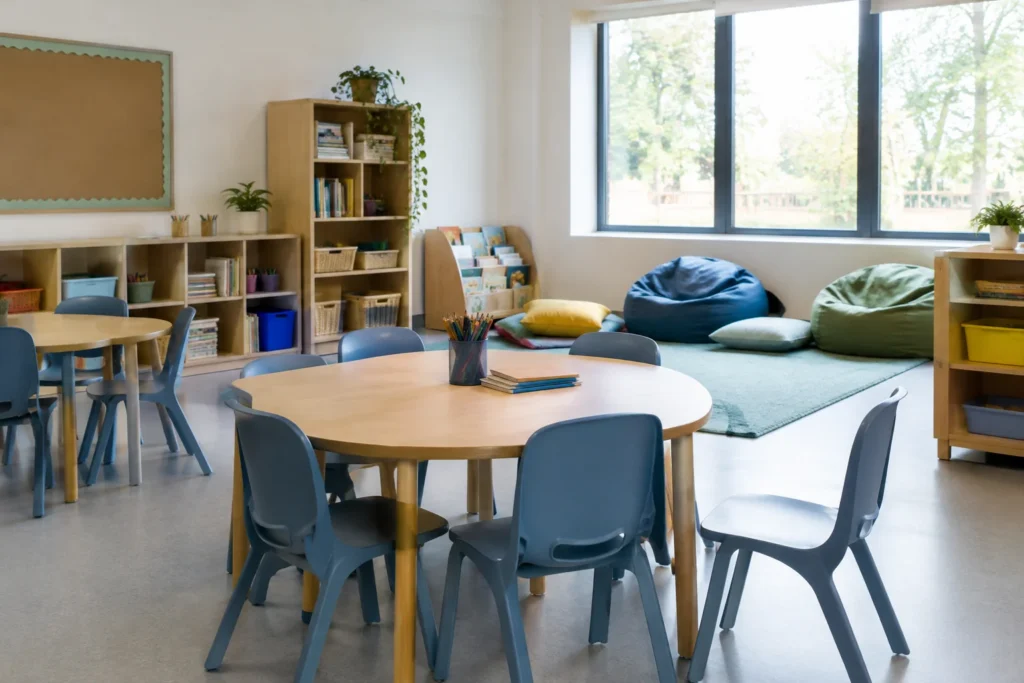
Wigan’s approved SEND reform plan prioritises earlier help and stronger mainstream support. Historic-deficit funding and Hope School’s separate expansion form distinct parts of the wider picture.
What approval means for families and schools
Wigan SEND reform has received government approval, establishing a direction for earlier help closer to home and stronger mainstream SEND support. Wigan Council announced the decision on 15 October 2026. Approval also enables access to estimated historic-deficit funding, but it does not establish that planned improvements have already reached families. This report covers developments announced by 23 October 2026; family-information services were checked on 24 October 2026.
Wigan SEND reform follows rising demand for support
The Department for Education approved Wigan’s Local SEND Reform Plan following its submission earlier in 2026, according to the council’s approval announcement. SEND means special educational needs and disabilities.
The council reports more than 13,000 children and young people identified with SEND across the borough. It also says the number of education, health and care plans, known as EHCPs, increased by over 40% in just over two years. These are different measures: the overall identified SEND population is not the same as the number with EHCPs.
Parents, carers, children and young people helped develop the shared vision for SEND and alternative provision. Staff working in early years, education and health also contributed.
Earlier SEND support and stronger mainstream provision
The approved direction emphasises help before difficulties escalate, closer to where children live. Stronger mainstream SEND support is intended to reduce reliance on statutory processes before assistance begins. That ambition should not be read as an announcement that statutory assessment rights have changed.
One planned element is Experts at Hand, a model for widening access to specialist advice. The Department for Education’s high-needs funding guidance describes universal and targeted support for mainstream settings from education and health services and specialist education practitioners. The intended offer combines support across settings with targeted help for more specific needs.
The guidance places additional Experts at Hand funding alongside mainstream core allocations and high-needs funding through the dedicated schools grant. It is therefore a support model within a wider funding system, not another name for an EHCP or a school-building programme.
Wigan SEND reform also targets smoother transitions between education settings, better attendance, fewer exclusions, shorter SEND delays and stronger family trust. Initial implementation includes early intervention, mainstream support, processes and inclusive provision. These are areas for improvement, not measured results attributable to approval.
Wider national changes remain distinct
The council’s national SEND reforms explainer, checked on 24 October 2026, describes a wider future programme. It envisages inclusion bases, stronger partnerships between mainstream and special schools, and better access to educational psychologists, speech and language therapists, occupational therapists and specialist teachers.
Its proposed support arrangements include adjustments or small-group work, Targeted Plus involving specialists, and specialist support for complex needs. The explainer also discusses earlier help through family hubs and nurseries, alongside transitions and preparation for adulthood, employment and independence.
The council describes new systems as expected from 2029, with full transition from 2030 onwards. Those dates concern the wider reform programme. They are not Hope School’s construction timetable or evidence that future arrangements have already replaced existing SEND entitlements.
Specialist places and the role of special schools
Earlier scrutiny provides context for Wigan SEND reform, but it needs to be read with its date attached. At the meeting on 14 July 2026, the Head of SEND said there was no intention to reduce special-school capacity. Special schools would remain centres of expertise.
The July committee record describes an expectation that all secondary schools develop inclusion bases. It also records discussion of approximately 358 additional specialist places across primary and secondary education, supported by capital and revenue funding.
Officers discussed a £6 million capital allocation. Priorities would reflect individual school assessments, differing building requirements and reviews of where specialist places were most needed. This was not presented as an identical allocation for every school.
They also described service-level agreements for SEND units and resource provision. These were intended to replicate specialist support rather than offer a lower tier of provision. The discussion therefore concerned both the location of places and the support delivered within them.
Transport overspending was linked partly to out-of-borough independent special-school placements. That observation does not establish future savings or a change to transport eligibility. The committee also heard about curriculum pathways towards employment and independence, with reform funding spanning early years through further education.
These details record July’s discussion. They should not be treated as confirmation that every proposal remained unchanged in October’s approved plan. Nor does the figure of approximately 358 places establish Hope School’s final additional pupil capacity.
What the High Needs Stability Grant covers
The council says Wigan SEND reform approval enables access to an estimated £23.4 million High Needs Stability Grant. It expects this to address around 90% of the borough’s historic High Needs deficit. The announcement does not describe that estimate as money already received.
National guidance makes the 2026/27 grant conditional on Department for Education approval of a local reform plan. It covers 90% of eligible high-needs-related dedicated schools grant deficits accrued up to the end of 2025/26.
The distinction matters: this is historic-deficit support, not funding for 90% of future SEND expenditure. It is neither a personal grant for families nor an allocation for new classrooms.
The dedicated schools grant is the main government funding source for local-authority and school education in England. Its four funding blocks cover early years, schools, high needs and central school services, with spending governed by grant conditions and regulations.
Three financial references therefore need to remain separate: the estimated £23.4 million stability grant, the £6 million capital allocation discussed in July, and Hope’s £18 million construction contract. They describe different purposes and should not be added together as a single newly announced investment.
Hope School’s separate expansion and relocation
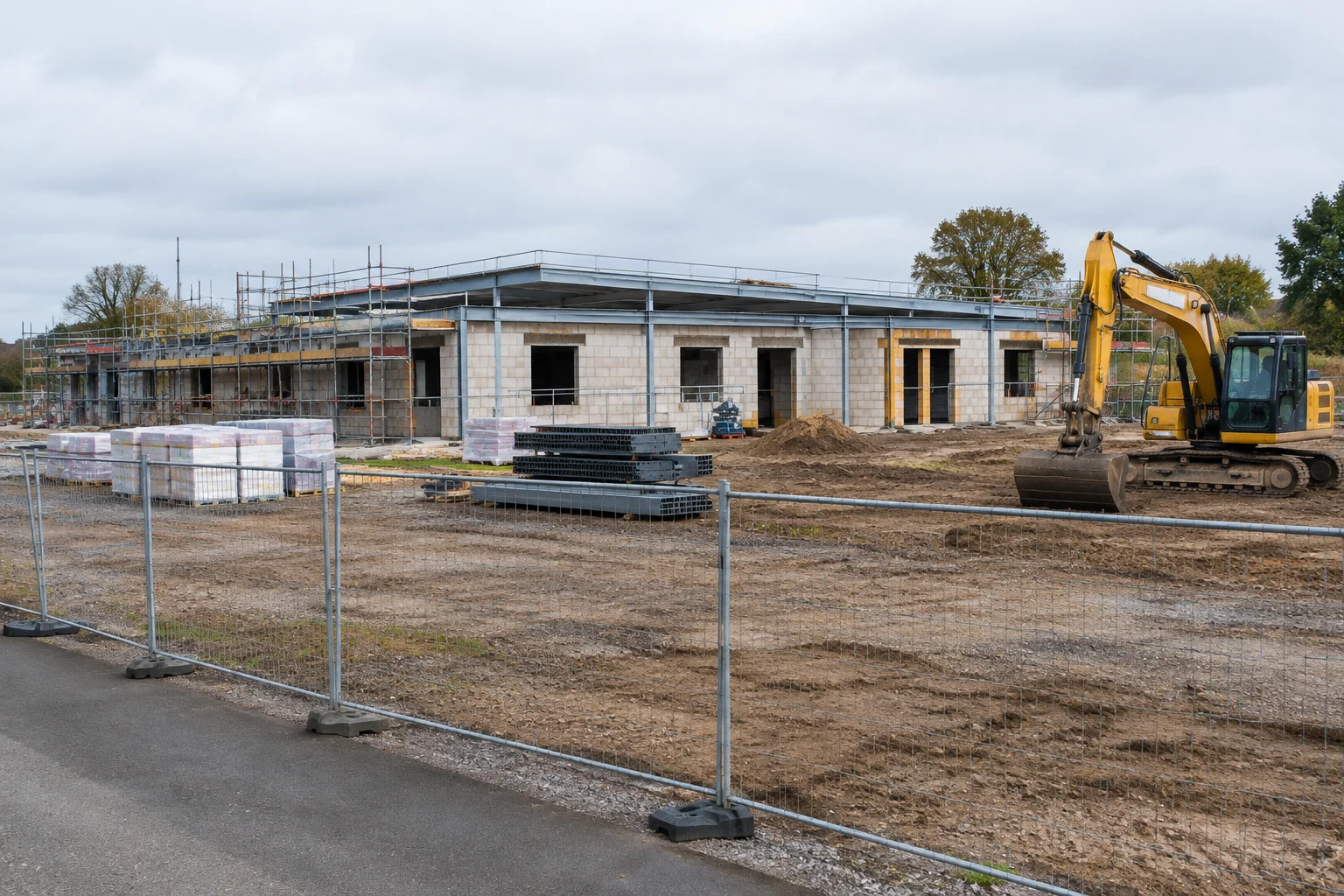
A separate council announcement on 7 October 2026 confirmed Conlon Construction’s appointment for Hope School’s expansion and relocation, under an £18 million contract. Work had started, with the new facilities planned to open for the 2027/28 academic year.
The school, which supports pupils with learning difficulties and complex physical needs, is to move from Kelvin Grove in Marus Bridge. Its destination is the Hope College campus on Montrose Avenue in Norley Hall.
The plans specify two new teaching buildings and changes to an existing building:
- The larger teaching building is planned to contain 13 classrooms, a hydrotherapy pool, a kitchen, a rebound room and reception offices.
- The second new building is planned to provide 10 classrooms, a dining hall and seven specialist resource rooms.
- An existing building will become administration space and accommodation for pupils with the most complex needs.
External works include parking, drop-off areas, playgrounds and landscaping. These elements form part of the campus project alongside its teaching and specialist facilities.
The appointment also includes commitments concerning local workers and apprentices, plus financial support for local SEND and family-support organisations. The announcement does not establish how many jobs will result or demonstrate that those commitments have already been delivered.
Classroom counts do not, by themselves, establish final additional pupil capacity.
Free impartial advice for families

Existing advice is available separately from the reform programme. As checked on 24 October 2026, Wigan’s SEND Information, Advice and Support service, or IAS, offers free, impartial information, advice and support to families of children and young people with SEND.
The service encourages partnership with schools, the council and other organisations involved in a child’s or young person’s support. Its published scope includes EHC assessment and planning, additional SEN support, individual casework and representation.
It also covers preparation for meetings, help with forms and letters, resolving disagreements, mediation and tribunals, and preparation for adulthood. This gives families an advice route for questions about existing support, rather than requiring them to wait for future reform arrangements.
The type and duration of assistance are tailored to individual needs. Contact may involve face-to-face meetings, telephone or email. The service also signposts parent groups and other local or national sources of help. Its published scope should not be read as a guarantee of representation or a particular outcome in every case.
Parents can self-refer by telephone or email. Professionals may contact IAS on a parent’s or young person’s behalf, but the service requires consent before acting on those requests. IAS is the relevant advice service here; Greater Manchester Businesses reports the information and does not provide SEND casework.
Information and participation through the Local Offer
As checked on 24 October 2026, Wigan’s SEND Local Offer has separate information routes for parents and carers, young people and professionals. It also carries SEND news and reform information.
It links to Our Town Directory for childcare and services for children with SEND, and to LINC2 for youth activities and advice from young people. Other routes cover contacting the SEND team, giving feedback, finding events and opportunities, becoming a SEND Champion and accessing Wigan Parent Carer Forum.
For current information and links to support, visit Wigan Council’s SEND Local Offer.