
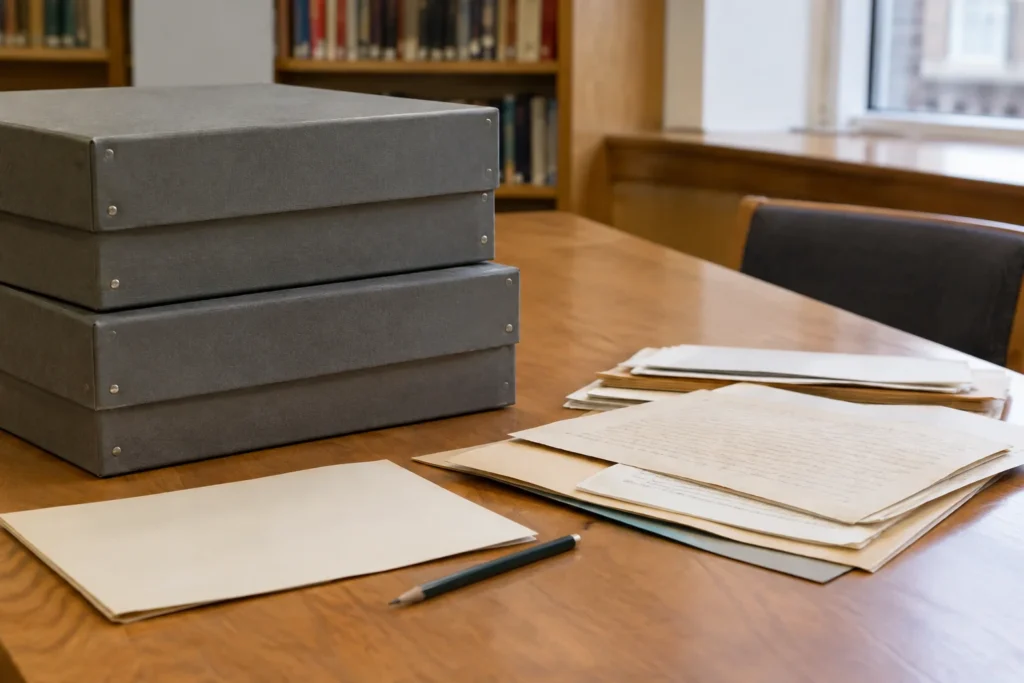
The University of Salford plans to exhibit Terry Eagleton’s archive from 24 November to 11 December 2026, with selected digital items scheduled for 20 November.
Public access planned for November
The Terry Eagleton archive is scheduled to go on public display at the University of Salford from 24 November to 11 December 2026. Selected digital items are planned for release on 20 November. Announced on 22 October, the Terry Eagleton exhibition will take place at Clifford Whitworth Library, on the university’s Peel Park campus.
The announcement concerns access to the Eagleton collection, rather than its initial arrival. Salford’s English Research Centre had already announced the acquisition in February. As at 24 October 2026, both November access dates remain future plans.
Terry Eagleton archive: November exhibition and online dates
The university’s exhibition announcement sets out two stages: a curated online selection from Friday 20 November, followed by the physical display from Tuesday 24 November. The exhibition is scheduled to end on Friday 11 December.
Salford says the writer entrusted the archive to the university for long-term preservation and research. It describes the acquisition as its largest collection acquisition in recent years. That description concerns the university’s own acquisitions, rather than a comparison with archives elsewhere.
Inside the collection of manuscripts, recordings and journals
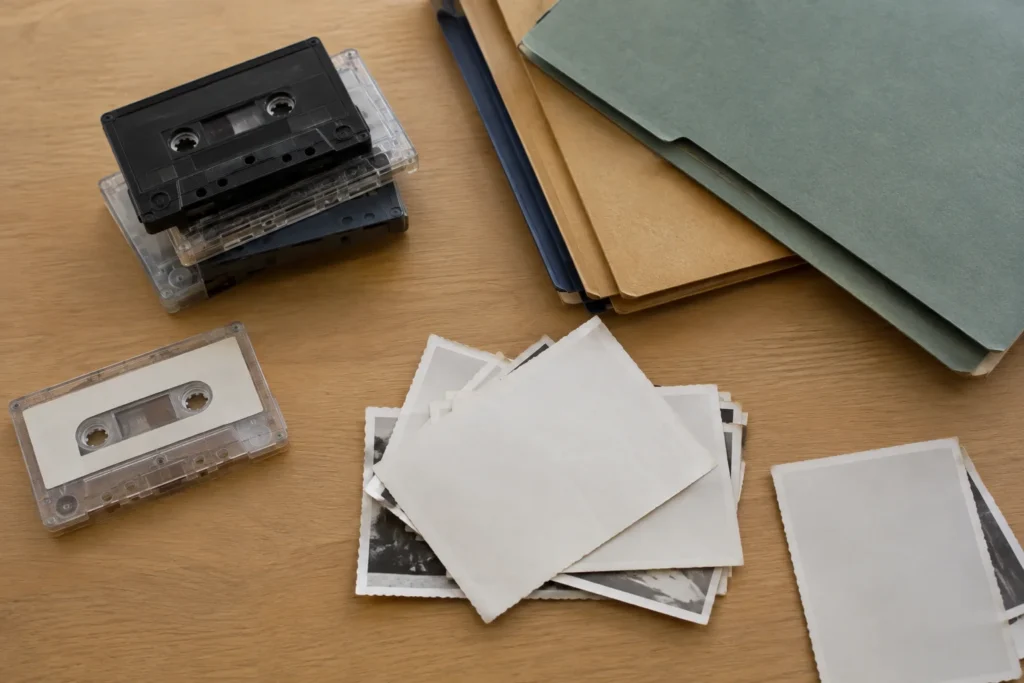
The October announcement dates the Terry Eagleton archive from the early 1960s to 2026. It identifies unpublished plays and poetry, cassette tapes, photographs, handwritten notes and material relating to his academic life.
These are different kinds of evidence from a shelf of published books. Notes and manuscripts can support study of writing in progress, while photographs and recordings offer other perspectives on a writer’s working life. Their presence does not establish what any individual document contains, or which examples visitors will see.
One specifically identified holding is an almost complete run of Slant, the left-leaning Catholic journal Eagleton edited between 1964 and 1969. It connects the collection with an early period of his editorial work and with the relationship between religion and politics that appears elsewhere in his writing.
The English Research Centre’s February acquisition notice described ten boxes previously stored at Eagleton’s home. Its account also listed research notes, folders of unpublished plays and manuscripts, journals, posters, books and correspondence. It included ephemera: material such as printed notices that may originally have served a short-lived purpose.
The latest announcement gives the collection’s scope as extending to 2026. The February account used an earlier endpoint, but neither account establishes a separate second donation. The documented contents describe the wider Eagleton collection, not a confirmed item-by-item programme for the exhibition.
Eagleton’s route from Salford to Cambridge and beyond
The Terry Eagleton archive has a direct local connection. Eagleton was born in Salford and attended De La Salle College before reading English at Cambridge. The University of Salford awarded him an honorary degree in 1993, well before the acquisition announced this year.
Lancaster University’s biography records that he completed his Cambridge PhD under Raymond Williams and became a fellow of Jesus College. It describes him as the college’s youngest fellow since the eighteenth century.
His later appointments included Oxford’s Thomas Warton professorship from 1992 to 2001. He then held the John Edward Taylor professorship at Manchester from 2001 to 2008, before moving to Lancaster in 2008. Lancaster heads his profile Professor Emeritus.
The critic’s work across theory, fiction, theatre and film
Although Eagleton is associated with literary criticism, the Terry Eagleton archive also contains creative manuscripts. His published work provides useful context for that breadth, without establishing that drafts of particular published titles are present.
Lancaster lists the novel Saints and Scholars, the play Saint Oscar, the screenplay for Derek Jarman’s Wittgenstein and the memoir The Gatekeeper. These forms involve different relationships with readers, audiences and collaborators. The collection’s unpublished plays and poetry therefore sit alongside an established record of creative writing.
His critical books include Criticism and Ideology, The Ideology of the Aesthetic, The Illusions of Postmodernism and Why Marx Was Right. Lancaster connects this work with Marxist criticism, ideology and cultural theory: approaches concerned with how literature and culture relate to social and political life.
The biography also links his Irish ancestry and interest in Irish political history with Heathcliff and the Great Hunger and Crazy John and the Bishop. Catholicism is another recurring concern, giving further context to the collection’s Slant holdings.
Wiley dates Literary Theory: An Introduction to 1983. The publisher describes it as a survey of major twentieth-century approaches to literary study. It also lists an anniversary edition published in February 2008.
A new book on mortality in the archive’s launch year
The access announcement comes in a year that also brought a new Eagleton book. Yale University Press lists A Death of One’s Own: Reflections on Mortality with a publication date of 22 September 2026.
The publisher describes a personal examination of Western cultural responses to death through novelists, poets and playwrights. Its account names Andrew Marvell, Dylan Thomas and Samuel Beckett, and brings together comedy, humour, mortality and tragedy.
This provides a contemporary publishing context for the Terry Eagleton exhibition, rather than another announced component of it. The book’s publication, February’s acquisition notice and November’s planned access dates are separate developments. The collection’s stated endpoint of 2026 does not, by itself, confirm that manuscripts or working papers for this particular book are included.
Preserving primary sources for research and teaching
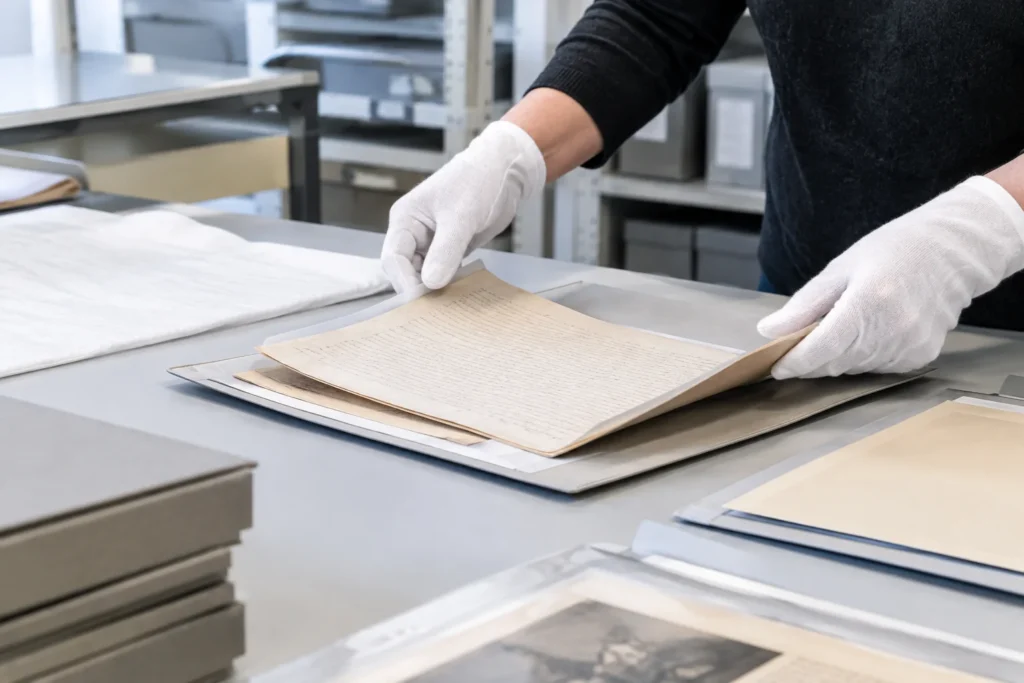
Preservation is a central purpose of the Terry Eagleton archive acquisition. Salford’s description of its archive service explains that records are retained permanently because of their evidentiary or historical value. They provide primary sources: original materials that researchers can examine directly, rather than relying only on later accounts.
As described on 24 October 2026, the service’s support includes collection expertise, advice about other repositories, workshops and individual research guidance. Its teaching provision includes tailored group introductions, opportunities to handle archive documents and support for dissertations and research projects. These are general services, not newly announced Eagleton-specific sessions.
The university’s archive vision also records student experience with digitisation techniques and metadata skills. Metadata is descriptive information that helps people identify, understand and find an item. Other projects have used archival stories in interactive public-history media.
The service’s general acquisition framework addresses ownership, storage, access, copyright and digitisation opportunities through deposit forms. These matters distinguish preserving a collection from making every part available online. The framework does not disclose the terms of Eagleton’s agreement. It explains the wider institutional work behind caring for papers, photographs and recordings over time.
The literary collections and partnerships behind Salford Digital Archives
The planned Terry Eagleton archive selection will join an existing digital setting. Salford Digital Archives launched in 2021. The university describes online resources encompassing photographs, documents, literary manuscripts, sound recordings and historical plans from university and partner collections.
The Salford Digital Archives collection overview, as recorded on 24 October 2026, groups literary material under Harold Brighouse, Stanley Houghton and Walter Greenwood. Other subject areas include university history, politics, media, local history and engineering.
The archive service’s vision describes Greenwood manuscripts, working notes and correspondence; Houghton’s unpublished works and stage photographs; and Hopcraft scripts that were never produced. These are separate holdings, not contents of the Eagleton collection.
The service has also worked with Salford Local History Library and the Working-Class Movement Library to curate digital collections and broaden access. That background places the forthcoming selection within a wider local network of literary and historical resources. It does not establish the number of Eagleton items that will appear online.
How the wider archive service supports research visits
As at 24 October 2026, Salford’s archive service states that its collections are open to everyone and available for in-person consultation on campus by appointment. For ordinary research visits, it requests five working days’ notice, a proposed date, details of the material required and any additional access requirements.
Those arrangements concern research consultation. They should not be treated as the admission rules for the November exhibition. The announcement does not establish exhibition-specific opening hours, ticket arrangements or booking requirements.
For anyone seeking research access beyond the showcase, the next step is to consult the university’s archive contact page and discuss the material they wish to use. That keeps an individual research enquiry distinct from the planned public display and online selection.
Sources
- University to launch The Terry Eagleton Archive collection | University of Salford
- Terry Eagleton’s personal archive arrives at the University of Salford | English Research Centre | University of Salford
- Terence Eagleton – Lancaster University
- Literary Theory: An Introduction — Wiley-VCH
- A Death of One’s Own: Reflections on Mortality — Yale University Press
- About the Archives | University of Salford
- Our Vision | University of Salford
- Salford Digital Archives | University of Salford
- Contact the Archives | University of Salford