
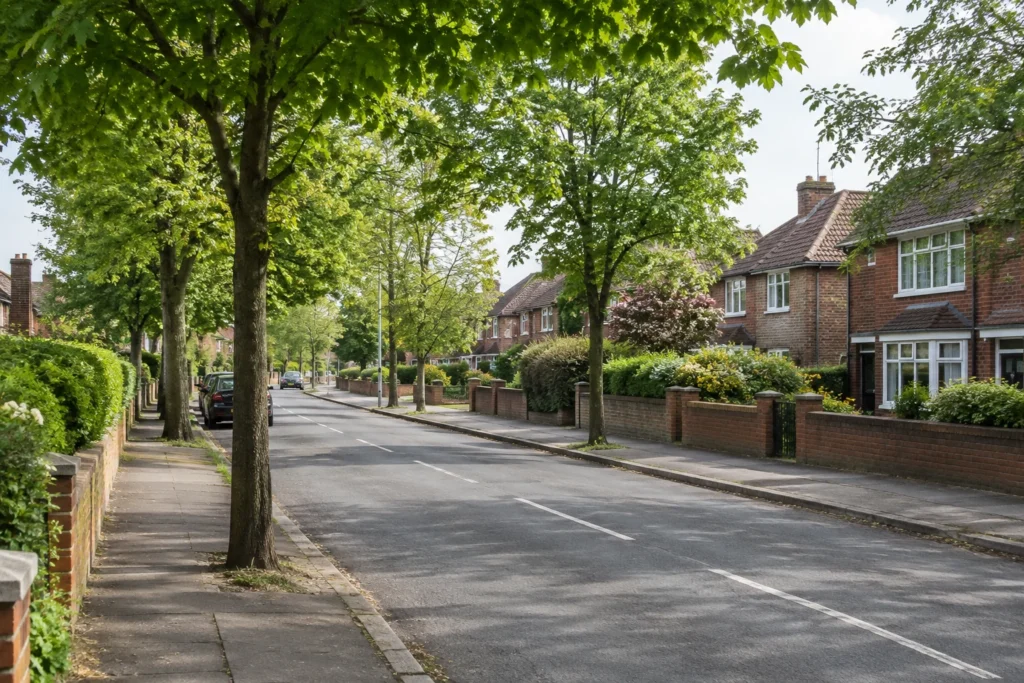
People living and working in Alt and Holts have been invited to help shape a 10-year investment plan. Community priorities and future spending decisions remain to be developed.
Community input before spending decisions
Alt and Holts residents are being invited to help shape a 10-year investment plan, rather than comment on a settled project list. Oldham Council’s announcement on 2 October 2026 asked people living and working locally to influence priorities for Alt and Holts Pride in Place. The national offer is up to £20 million in funding and support per place over a decade.
Alt and Holts residents invited to shape investment
The council’s 2 October announcement described a newly established Neighbourhood Board beginning work on its long-term plan. It identified Laurian Macdonald as chair and said community feedback, alongside local evidence, would inform future investment decisions.
The invitation extended beyond householders. Workers, young people, businesses, community organisations and faith groups were also asked to contribute. The questions concerned what people valued, what needed improvement and where investment could make the greatest difference.
It said board members would speak with residents, businesses and community organisations over the coming weeks. That was the timetable described on 2 October, not a fresh confirmation of particular events. The statement offered a mailing list for updates and participation opportunities, rather than a dated consultation-event schedule.
How local voices will reach the board

The council’s Alt and Holts Pride in Place page describes a board bringing together residents and representatives from community organisations, education, housing, health, local government and other partners.
Its stated responsibilities include developing the plan, asking residents about priorities, deciding spending and overseeing delivery. The intended engagement process uses existing groups, networks and community organisations to seek different perspectives. Feedback is to be collected, reviewed and formally presented to the board.
The undated programme page, checked on 24 October 2026, provides a mailing-list link and the contact address PrideinPlace.AH@oldham.gov.uk. It describes involvement and future funding updates, without announcing a current grant application window.
Nationally, engagement is more than publicity. The prospectus requires boards to develop plans with the wider community through broad, deep and sustained participation. The Ministry of Housing, Communities and Local Government, or MHCLG, requires evidence of engagement before plans are agreed.
What the board has already discussed
An earlier meeting provides context for the October invitation. Draft minutes from 14 August 2026 record members discussing their aspirations for Alt and Holts Pride in Place. The October announcement was therefore not the board’s first recorded meeting.
Those aspirations included stronger community influence, opportunities for young people, safer and better-connected communities, neighbourhood pride and better use of existing assets. They were introductory ambitions, not an approved schedule of investments.
The presentation emphasised building on existing strengths, partnerships and activity. It also discussed aligning work with local, Greater Manchester and national initiatives, both to avoid duplication and to explore additional resources.
The draft record distinguishes the board’s role in shaping Alt and Holts investment priorities from Oldham Council’s accountable-body responsibilities. These include governance, financial management, procurement and programme support.
Members also considered maintenance responsibilities, operating costs, technical expertise and the long-term viability of buildings and community assets. These discussions concerned what would be needed to sustain assets, not just create or improve them.
A governance workshop explored oversight, collective responsibility and consensus-based decision-making. The draft minutes also record approval of £4,030 for communications, marketing and photography, supporting shared resources across Alt and Holts and Chadderton. That expenditure is distinct from an agreed programme of neighbourhood investment projects.
How the decade-long programme works
The national prospectus, updated on 17 September 2026, describes a programme covering 284 UK communities. It offers up to £20 million in funding and support per place over 10 years, within a national total of up to £5.8 billion.
The programme is un-competed: selected places do not compete against one another for the offer described. However, the headline amount is not money already spent or an immediate payment to residents and businesses.
Its three objectives are thriving places, stronger communities and taking back control. Within programme rules, boards can determine the timing and focus of investment rather than treating the funding as one short-term spending exercise.
The prospectus expects a transition towards community-led delivery by year three. Possible models include an existing community anchor organisation, or a board becoming a co-operative, community interest company, community benefit society or charity. These are national possibilities; no particular model for Alt and Holts Pride in Place is established here.
Alt and Holts investment must also remain distinct from Chadderton’s separate programme. Projects, consultation findings or decisions concerning that area cannot be treated as commitments for Alt and Holts.
The national options for streets, spaces and enterprise
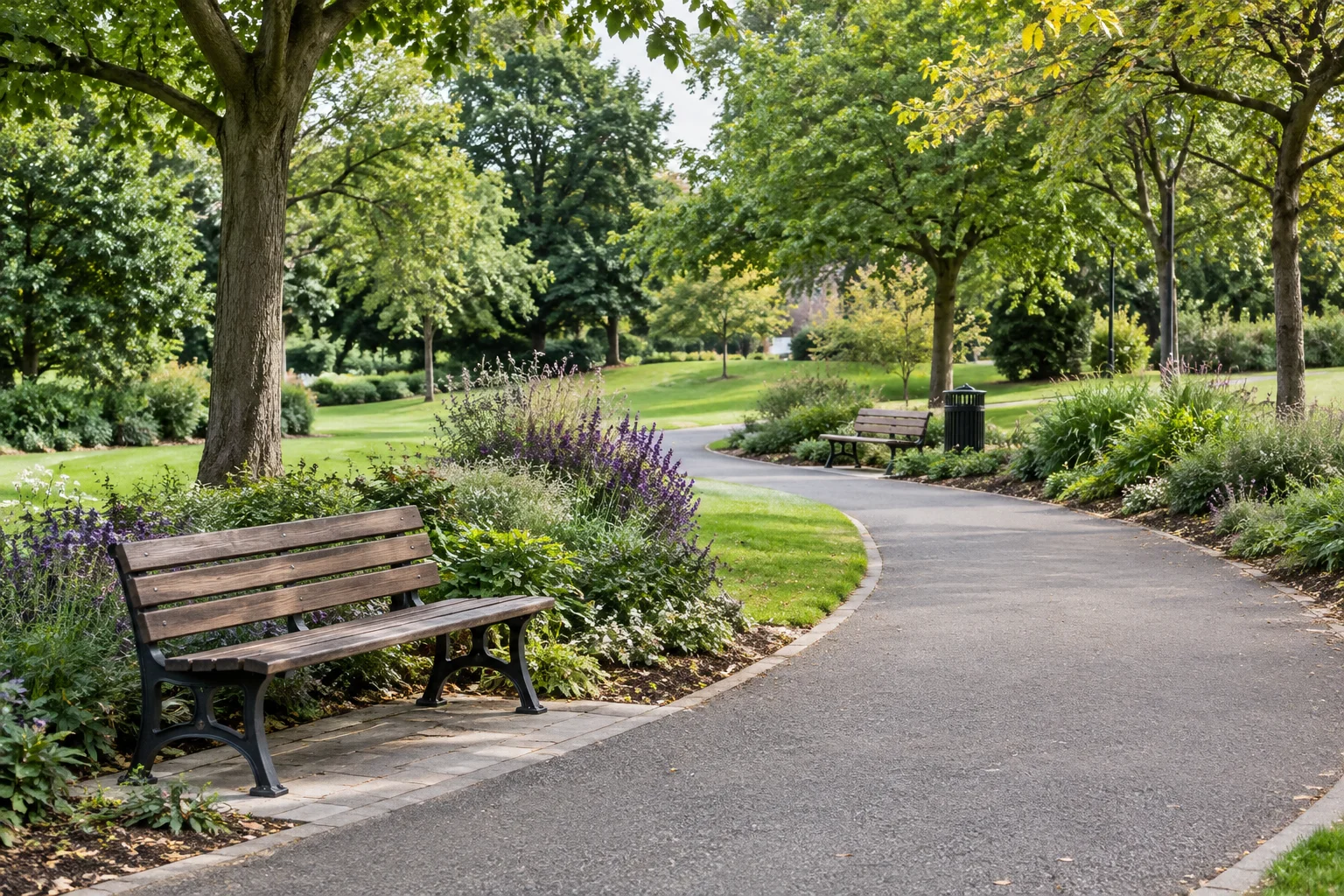
The government’s indicative interventions show the breadth of activity the programme can support. The list is deliberately broad and non-exhaustive. Activity outside it requires a community-supported case and a business case agreed with MHCLG.
Public-realm examples include pavement repairs, street furniture, public toilets and accessibility improvements. Green-space examples include park regeneration, community gardens, tree planting and better access to existing parks.
Community infrastructure can involve both capital expenditure and operational costs. In plain terms, national options can cover physical assets as well as costs associated with running provision. This distinction connects with the August board discussion about maintenance and long-term viability.
For local businesses, examples include strengthening existing business-support networks, helping entrepreneurs, supporting markets and improving retail infrastructure. Training equipment linked to employers’ skills needs is another possibility. The guidance encourages established support channels and relevant regional partners.
Other examples concern cultural activities, refurbished community spaces, youth engagement, volunteering and community-led services. Support for co-operatives and social enterprises also appears in the national range.
Residents’ panels and participatory budgeting are included too. Participatory budgeting gives communities a role in deciding how a defined budget is used; its inclusion does not mean that a local scheme has been announced.
What the neighbourhood plan must explain
The national 10-year vision content checklist, updated on 17 September 2026, explains what a substantive public-facing vision should contain. It provides planning context, not evidence that Alt and Holts Pride in Place has already published its document.
The checklist sits within guidance for phase 2 places. No cohort-specific submission deadline is established for Alt and Holts in the records covered here.
It calls for an accessible account of the community’s vision and how change will be delivered. Most visions are envisaged as up to 30 pages, submitted as PDFs. The emphasis is on explaining the intended change publicly, alongside the arrangements needed to deliver it.
A map should match the agreed neighbourhood boundary. The place-and-people section can explain geography, history, identity and the area’s story, grounding the vision in the community concerned.
The engagement account should identify who participated and how different parts of the community were reached. It should explain the inclusion of seldom-heard groups, remaining participation gaps and how those gaps will be addressed. Emerging themes should be supported by evidence about challenges and opportunities.
For each priority, the document should connect the evidence with why it matters, how residents shaped it and what successful delivery would change. It should also identify the interventions intended to contribute. This would make the connection between community input and Alt and Holts investment proposals visible to readers.
The checklist asks how continuing engagement, monitoring and learning will refine the approach over time. It also seeks clarity about partner roles, governance, accountability and project selection.
For places within a Mayoral Combined Authority, it asks whether that authority has been consulted or consultation is planned. This requirement does not establish that such consultation has already happened locally.
How decisions and spending should be scrutinised
The national delivery guidance makes neighbourhood boards the funding decision-makers, supported by the local authority and MP. The local authority initially acts as accountable body, while the community shapes priorities and holds those responsible to account.
Boards must have at least eight members. At least 51% should live or work within the neighbourhood boundary, members have equal voting rights, and recruitment should broadly reflect community diversity. These are national requirements, not a verified assessment of the Alt and Holts Pride in Place board’s membership.
The expected public record includes membership, member profiles, governance arrangements and a documented decision-making process. Meeting papers, minutes, decision logs and transparent spending records should also be available. Board papers are open by default.
The guidance expects draft minutes within 10 working days after meetings and final minutes within 10 working days of approval. Members must declare relevant interests and withdraw from relevant decisions; declared conflicts should appear in published minutes.
Accountability continues beyond writing the plan. Boards must report progress and barriers, show how feedback was considered and give residents space to scrutinise delivery. MHCLG requires evidence of meaningful engagement throughout the programme, rather than only during initial planning.
Sources
- Alt and Holts residents invited to shape £20m investment in their community | Oldham Council
- Alt and Holts Pride in Place | Alt and Holts Pride in Place | Oldham Council
- committees.oldham.gov.uk
- Pride in Place Programme: prospectus – GOV.UK
- Pride in Place Programme: list of indicative interventions – GOV.UK
- Pride in Place Programme : 10-year vision content checklist – GOV.UK
- Pride in Place programme: delivery guidance – GOV.UK