
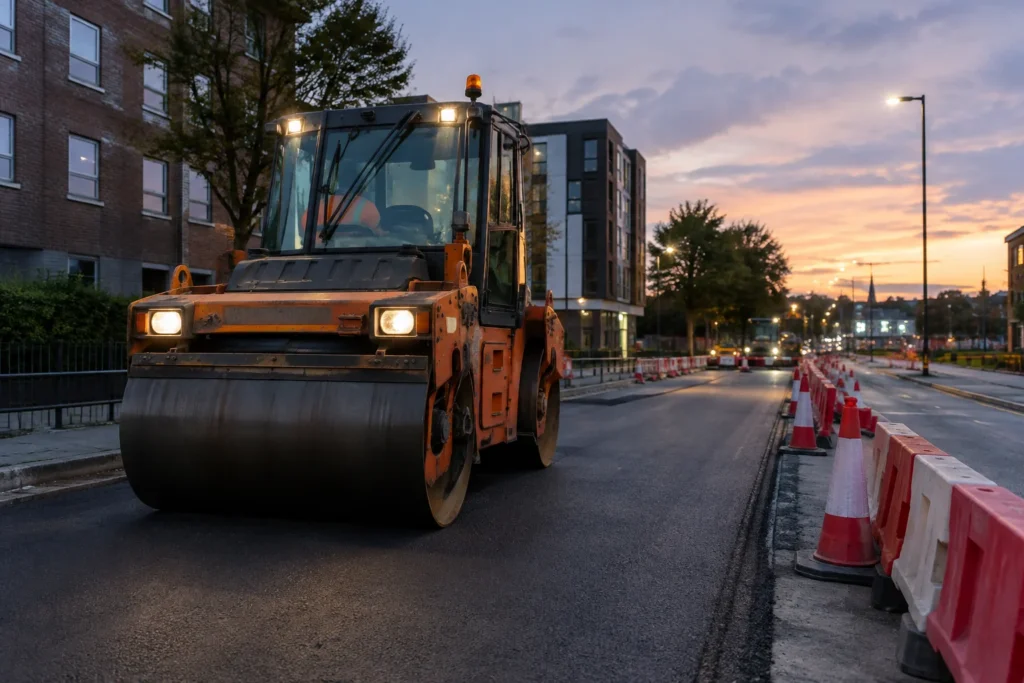
Night restrictions are planned around Salford’s Trinity Way and Chapel Street junction. Council notices set out specific side-street closure nights and alternative access arrangements, alongside the wider improvement programme.
Planned restrictions and alternative approaches
Trinity Way–Chapel Street resurfacing involves planned night restrictions around the Salford junction, with East Ordsall Lane restrictions listed from 26 October and specific Gore Street closures continuing into November. The council’s notices distinguish individual closure nights from the wider improvement programme: they do not describe all roads closing continuously.
This report is dated 25 October 2026. The council’s current roadworks bulletin is dated 23 October, while its detailed junction project page carries a 9 October update. The resurfacing and access arrangements remain scheduled activity, rather than completed work.
Trinity Way–Chapel Street resurfacing timetable
Salford’s current roadworks bulletin lists the wider Chapel Street and Trinity Way highway improvement works between 27 July and 15 November 2026. It describes lane closures during that programme.
Those dates cover more than resurfacing. Individual side-street entries give narrower dates and overnight hours, generally 7pm to 5am for the restrictions described below. A programme end date is therefore not the same as a promise that every approach remains closed until then.
The bulletin’s publication date also should not be confused with an announcement date for every detail. The project page’s earlier update and the later bulletin describe different aspects of the same continuing scheme.
Northbound closures and East Ordsall Lane access
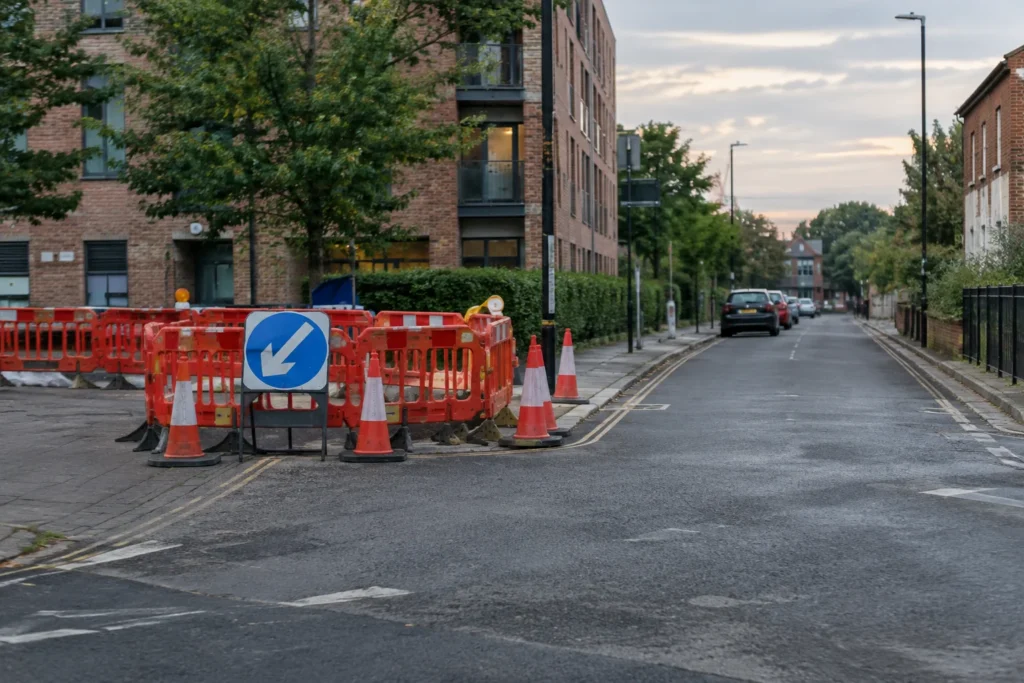
For East Ordsall Lane access, the bulletin contains two relevant entries. One lists night restrictions between 26 October and 12 November, operating from 7pm to 5am. Another specifies closure on 26–30 October.
The broader date window should not be read as evidence that the road closes every night until 12 November. The separate closure entry provides the more specific dates for that restriction.
These entries establish restrictions affecting the side street. They do not, by themselves, establish the complete northbound Trinity Way carriageway closure schedule or a verified diversion route. Treating the two as interchangeable would give drivers a more extensive closure timetable than the bulletin supports.
For anyone approaching through East Ordsall Lane, the important distinction is between the overall restriction window and the particular closure nights, rather than simply the final date shown.
Southbound closures and Gore Street access
Gore Street access from Trinity Way is scheduled to close on five specified nights: 30 October and 2, 3, 9 and 10 November. The published hours are 7pm to 5am.
The council says Gore Street’s one-way order will be temporarily revoked to allow access from New Bailey Street. This changes the available approach while the connection from Trinity Way is closed.
That arrangement maintains an alternative way into Gore Street. It does not mean every approach stays open, nor does it establish unrestricted access to each individual entrance or delivery point.
The Gore Street dates also should not be used as a substitute for a complete southbound Trinity Way closure timetable. They specifically identify when access from Trinity Way is restricted. Keeping that distinction clear matters when a journey uses the main road without entering Gore Street, or reaches the street from another direction.
Access and bus travel during the works
Transport for Greater Manchester warns that temporary signals at the junction may lengthen bus journeys. Its junction works overview describes general weekday lane closures between 9.30am and 3.30pm, with two lanes on each approach at peak times.
That is TfGM’s general description of the scheme, not a guarantee covering every resurfacing shift. The council project page also describes continuing temporary signals and lane restrictions. Neither description justifies promising unrestricted daytime travel throughout the programme.
For bus passengers, the supported warning concerns possible additional journey time at the temporary signals. The general overview does not establish which services might use a different route at night, where replacement stops would be, or how many minutes a journey might take.
Alternative side-street access and general daytime traffic arrangements are different matters. The availability of one route into Gore Street, for example, does not establish normal access elsewhere around the junction. The published arrangements need to be read for the particular road and time concerned.
Crossings, bus lanes and the wider junction improvements
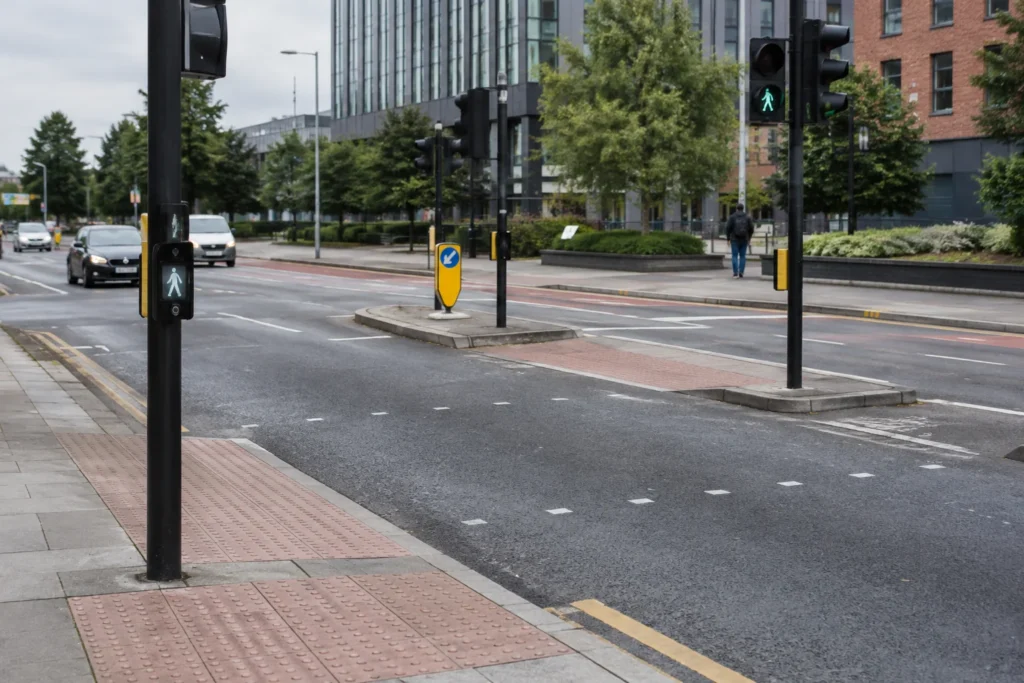
The resurfacing forms part of a broader first phase. TfGM describes that phase as lasting approximately 16 weeks from 27 July 2026, with full junction resurfacing, new and upgraded controlled pedestrian crossings, bus-lane enhancements and targeted junction changes intended to improve safety.
These are descriptions of the programme’s scope and intended purpose. They are not evidence that every element has been completed or that its effects on journey times and safety have already been measured.
Funding approved in June
A transport infrastructure decision dated 30 June 2026 approved £1.95 million and the full business case for Chapel Street/Trinity Way Phase 1.
The decision establishes the funding approval for that phase. It should not be described as the final amount spent on the works, or as a separate price for the overnight resurfacing alone. The approval relates to the wider phase, which includes several types of junction work.
Published bus-lane and crossing proposals
The council’s July traffic regulation notice provides more detailed proposals. It proposed extending Chapel Street’s westbound bus lane by 94 metres, ending at a point 20 metres east of Islington Way.
That is a defined change to the westbound bus lane, rather than a statement about bus priority on every approach. The notice establishes what was proposed; it does not, on its own, confirm that the extension is already operating.
The same notice proposed re-establishing the Trinity Way toucan crossing north-east of Chapel Street as a straight, non-staggered crossing with a wider central reserve. A toucan crossing is a signal-controlled crossing shared by pedestrians and cyclists.
The proposed layout is therefore more specific than a general reference to improved crossings. It identifies both the crossing’s position relative to Chapel Street and a change from a staggered arrangement to a straight crossing.
For Chapel Street’s westbound carriageway, the notice also proposed moving the twin speed cushions to approximately 30 metres west of Trinity Way. This is a separate road-layout proposal, not part of the temporary overnight access timetable.
All three details remain proposals in the July notice unless implementation is separately confirmed. The wider scheme description and funding decision provide context, but neither establishes that each proposed bus-lane, crossing or speed-cushion change has been brought into use.
Permanent changes at St Stephen Street and Ford Street
The July notice also sets out proposed changes to neighbouring streets. These need to be distinguished from the temporary restrictions associated with Trinity Way–Chapel Street resurfacing.
For St Stephen Street, it proposed prohibiting motor vehicles over the first 11.4 metres north of Chapel Street. The proposal included an exemption for e-scooters used in the trial.
For Ford Street, the notice proposed northbound-only motor traffic over 34.6 metres from Chapel Street, with an exemption for cyclists travelling in the opposite direction. It also proposed a 20mph limit between Chapel Street and Cleminson Street.
The proposed parking arrangements included no-waiting sections and an east-side disabled badge parking place. An east-side limited-waiting bay would operate Monday to Friday, 8am to 6pm, with a maximum stay of 30 minutes and no return within 90 minutes.
Those parking hours are proposed bay conditions, not resurfacing working hours. Likewise, the proposed speed limit is distinct from the temporary traffic controls used during construction.
The council’s junction project page separately describes Ford Street’s southbound closure as permanent. That description should not be overridden by the bulletin’s 6 November end date for its Ford Street entry: the administrative date does not establish a reopening.
However, the permanent closure description does not confirm implementation of every parking and speed-limit provision in the July notice. The distinction remains between the project page’s stated closure arrangement and the more detailed proposals.
Before travelling
The key point is to match the restriction to the road, direction and night involved. East Ordsall Lane access and Gore Street access have different published entries, while the wider junction programme includes lane restrictions beyond those specific closures.
Before setting out, check the council’s current roadworks information for changes to the scheduled arrangements.
Related local news
Questions about the planned restrictions
Will the Trinity Way and Chapel Street junction be closed continuously?
No. Salford’s bulletin describes lane restrictions during the wider works period, from 27 July to 15 November 2026, with separate overnight closure arrangements. That period does not mean a continuous full-road closure.
What restrictions are listed for East Ordsall Lane?
The council bulletin lists night restrictions between 26 October and 12 November 2026, from 7pm to 5am, alongside a separate closure entry for 26–30 October. The broader window does not establish a closure every night.
When will Gore Street access from Trinity Way close?
Access from Trinity Way is scheduled to close on 30 October and 2, 3, 9 and 10 November 2026, between 7pm and 5am.
How will drivers reach Gore Street during those restrictions?
The council says Gore Street’s one-way order will be temporarily revoked to permit access from New Bailey Street. This provides an alternative approach, not access from every direction.
Could bus journeys take longer during the works?
Yes. TfGM warns that temporary junction signals may lengthen bus journeys. Its general scheme overview does not establish route-specific night-time diversions or replacement stops.
What does the wider junction improvement phase include?
TfGM describes full junction resurfacing, new and upgraded controlled pedestrian crossings, bus-lane enhancements and targeted junction changes intended to improve safety. It describes the first phase as approximately 16 weeks from 27 July 2026.
How much funding was approved for Phase 1?
The transport infrastructure decision dated 30 June 2026 approved £1.95 million and the full business case for Chapel Street/Trinity Way Phase 1. This is an approval, not a confirmed final expenditure total.
Are all the Ford Street changes confirmed as implemented?
No. The July traffic notice establishes proposals for traffic direction, speed and parking arrangements. The council project page separately describes Ford Street’s southbound closure as permanent; that does not confirm implementation of every proposed provision.