
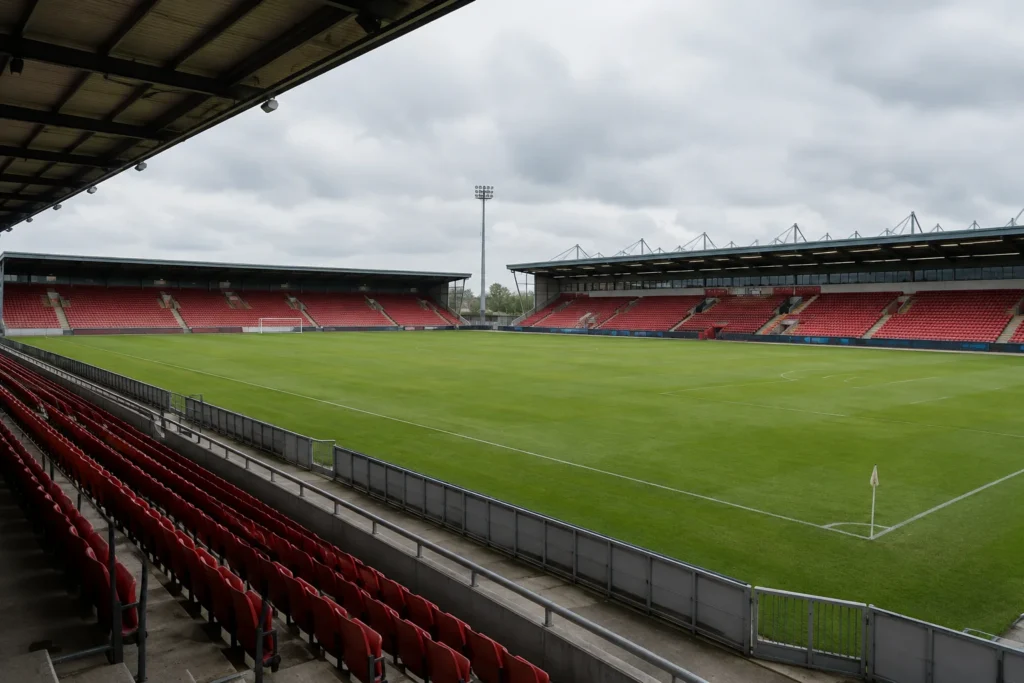
Manchester United is seeking supporters’ views on its proposed 100,000-seat stadium. The October survey covers matchday experience, heritage, atmosphere and travel, with responses due by 12:00 GMT on 6 November 2026.
Supporter views sought on stadium plans
The Old Trafford fan survey asks supporters to help shape Manchester United’s proposed 100,000-seat stadium, with responses closing at 12:00 GMT on Friday 6 November 2026. The Manchester United stadium survey covers matchday experience, heritage, atmosphere and travel. It is a design consultation, not an announcement of construction approval, completed funding or a final design.
As checked on 25 October 2026, the club’s participation arrangements include emailed invitations and an alternative route for supporters who opted out of marketing. Further focus groups are planned to explore the responses.
Old Trafford fan survey: how supporters can take part
United says match-going supporters, including season-ticket holders, official members and hospitality purchasers, have received participation emails. Those supporters should use the links supplied in their emails.
The club’s October survey announcement also provides an alternative route for supporters who opted out of marketing communications. It asks them to enter their Supporter ID if they have one.
These are the participation routes described by United, rather than a separate council process. Supporters looking to respond should start with their invitation or the official announcement, which contains the relevant survey access information.
The deadline is midday GMT on 6 November, not the end of that day. It applies to the October 2026 exercise. Earlier stadium surveys were separate rounds of research, so their instructions and deadlines should not be used for this consultation.
The immediate opportunity is to contribute evidence about the supporter experience while design work develops. Participation does not mean that a respondent’s preferred arrangement has been selected, or that the club has settled the facilities described in consultation material.
What the survey covers and what happens next
The survey reaches beyond seating inside the proposed ground. Its stated themes include the stadium and matchday experience, heritage and legacy, atmosphere, the wider campus, and journeys to and from the venue.
That scope brings together the experience of watching football and the surroundings through which supporters arrive and leave. Heritage and atmosphere are explicit subjects, rather than questions confined to the building’s appearance.
United says focus groups involving supporters from different backgrounds and experiences will follow in the weeks after the announcement. Their purpose is to explore themes, test emerging ideas and check that responses have been interpreted correctly.
The club also says it will share findings and explain how they influence design. This makes the follow-up important: collecting responses and showing their effect are different parts of the announced process.
Further engagement is promised at appropriate project stages on ticketing and affordability, supporter facilities, accessibility and other matchday matters. Those commitments are not an agreed ticket-price policy or a confirmed accessibility specification. The announcement describes subjects for continued discussion, not settled outcomes or a delivery timetable for individual facilities.
How earlier research informs the Old Trafford consultation
The October exercise follows several rounds of supporter engagement. United’s earlier 2025 survey announcement sought views on potential facilities, seating and pricing options. Commercial research company CSL conducted that survey, which followed July focus groups and was intended to inform the next design-development stage.
The same announcement described autumn 2024 research involving more than 50,000 supporters. United characterised it as its highest research engagement at that time. That participation figure does not establish that the responses represented every part of the fanbase, and it should not be read as a result from the current survey.
The earlier announcement also stated that the Stretford End should remain a vocal stand whose supporters set the matchday tone. This provides context for the current emphasis on atmosphere and legacy.
In a previous consultation update, United described focus groups alongside a later survey opportunity for known supporters unable to attend. The Old Trafford consultation has therefore been presented as a continuing process, rather than a single questionnaire determining the whole project.
Accessibility evidence beyond wheelchair spaces
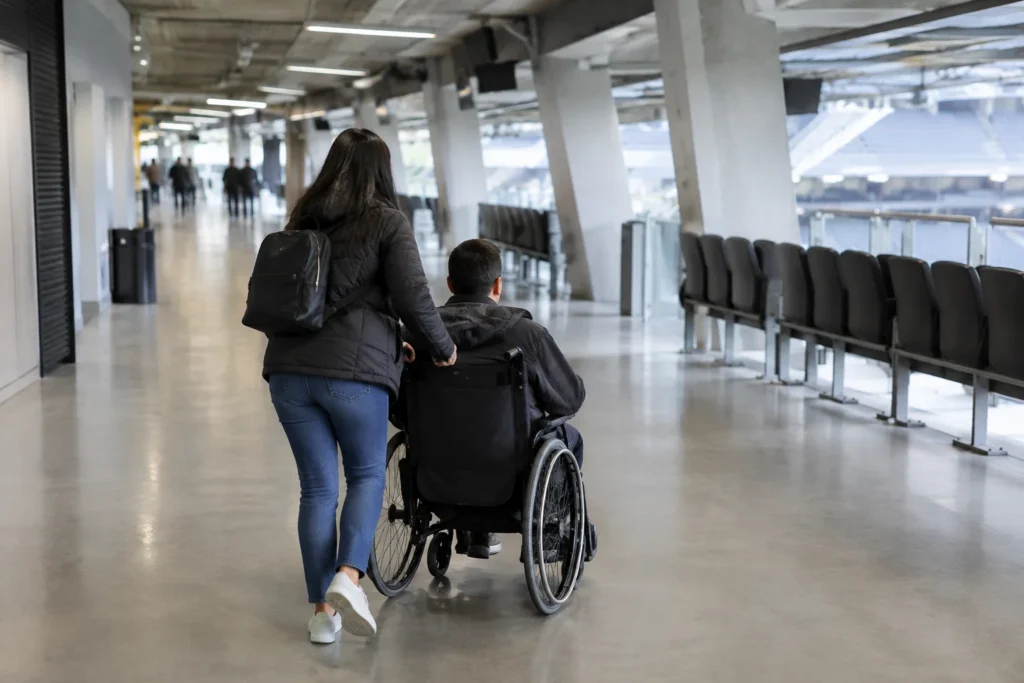
Manchester United Disabled Supporters’ Association, MUDSA, is conducting a separate accessibility exercise. As checked on 25 October 2026, it is seeking experiences from home and away supporters, initially focusing on Everton, Manchester City and Tottenham Hotspur.
Its request for accessibility experiences also accepts examples from other clubs, countries, sports and entertainment venues. The aim is to identify useful lessons, not simply compare football grounds.
The requested evidence covers several connected parts of a visit:
- Seating, companion positions and sightlines.
- Toilets, Changing Places facilities, lifts, entrances and concourses.
- Sensory provision, catering, signage, and audio and visual information.
- Assistance dogs, mobility-equipment storage, staff training and assistance procedures.
MUDSA wants examples of successful measures and innovations that have not worked. It distinguishes recurring design or training problems from isolated complaints, and highlights that home and away supporters can experience different provision at the same venue.
Respondents can save their forms and return before submitting. This separate exercise gives space to the practical details of access, including how facilities and staff support work together. The subjects listed are requests for evidence, however, not confirmation that particular features have been adopted for United’s proposed stadium.
The proposed stadium site and wider campus
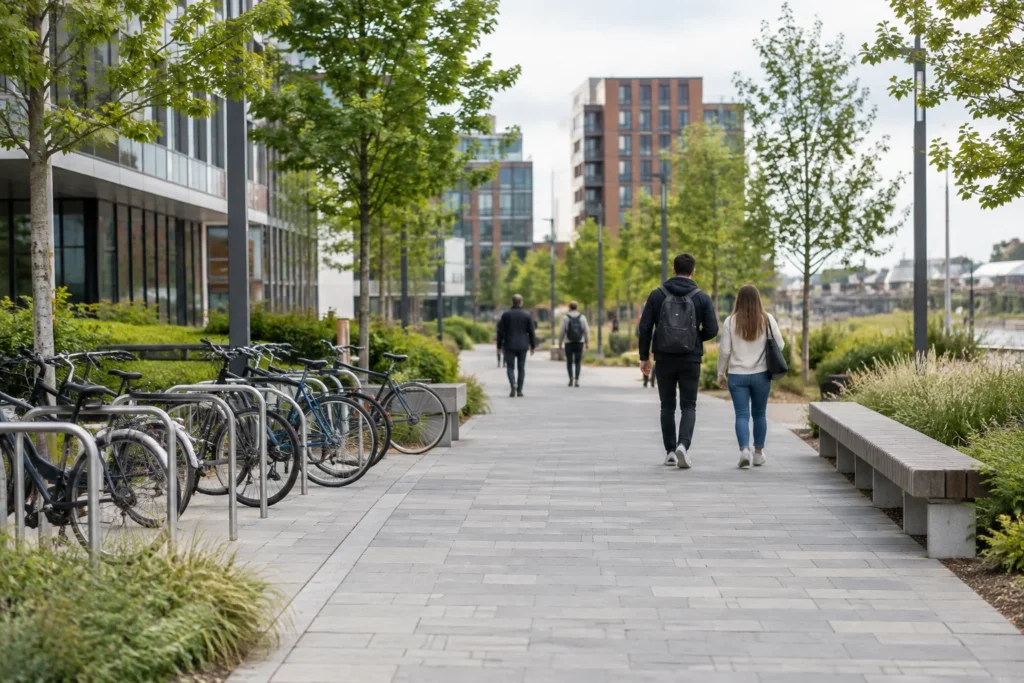
United’s proposed stadium location announcement identifies a site approximately 350 metres north-west of the existing ground. It places the stadium within a proposed Stadium District intended for sport, entertainment and year-round activity.
The club links that proximity to preserving supporter traditions and matchday rituals. This gives local context to questions about heritage and the wider campus: the proposal concerns both the ground and its relationship with the surrounding area.
The location announcement describes improved public transport, rail connectivity, walking and cycling infrastructure as parts of the wider Wharfside vision. These are proposed improvements, not evidence that new services or routes are operating.
It names Trafford Council, the Old Trafford Regeneration Mayoral Development Corporation, Greater Manchester Combined Authority and Transport for Greater Manchester as partners.
United also says the images accompanying that announcement are indicative, rather than final plans. At the time of the location announcement, it stated that no decision had been made about the existing Old Trafford stadium’s future. That statement belongs to that announcement; it should not be treated as a fresh decision disclosed through the October survey.
How the fan survey differs from council consultation
Trafford Council’s Wharfside masterplan consultation concerned a broader regeneration vision. The council describes the masterplan as a high-level framework guiding investment and development over 15 years and beyond, and informing future planning decisions.
Its stated ambitions include housing, jobs, parks, community facilities and supporting transport infrastructure, with benefits for existing communities. These are proposed outcomes of regeneration, not completed improvements or guarantees arising from the stadium survey.
The council consultation opened on 28 July and closed on 22 September 2026. It sought views from residents, landowners, businesses and potential new communities. That differs from United’s detailed engagement on stadium design, appearance and facilities.
The council said responses would inform revisions and a consultation statement accompanying a final version submitted for Executive adoption in autumn 2026. Adoption has not been verified as of 25 October 2026; an anticipated submission is not confirmation that the masterplan has been adopted.
Stadium-specific operational and design comments outside the masterplan’s scope would be passed to Manchester United. For residents and businesses, the distinction matters: views about the wider neighbourhood framework and feedback about the supporter experience enter different consultation processes, even though both concern the future of the same area.
The next step for supporters
Supporters wishing to complete the Manchester United stadium survey should use their emailed invitation or the alternative route in the official club announcement before 12:00 GMT on 6 November 2026. The next substantive update to watch for is United’s promised explanation of the findings and their influence on design.
Related reading
Questions about the stadium survey
When does the Old Trafford fan survey close?
The October 2026 survey closes at 12:00 GMT on Friday 6 November 2026.
How can supporters access the survey?
Invited supporters should use their emailed participation links. As checked on 25 October 2026, the club announcement also provides an alternative route for supporters who opted out of marketing, asking them to enter a Supporter ID if they have one.
What does the Manchester United stadium survey cover?
It covers the stadium and matchday experience, heritage and legacy, atmosphere, the wider campus, and journeys to and from the ground.
What will happen after the survey?
United plans focus groups to explore themes, test emerging ideas and check its interpretation of responses. The club says it will share findings and explain how they influence design, with further engagement at appropriate project stages.
Is this the first supporter consultation about the stadium?
No. United describes autumn 2024 research involving more than 50,000 supporters, followed by further focus groups and a separate 2025 survey on potential facilities, seating and pricing options.
Is MUDSA’s accessibility exercise the same as the club survey?
No. As checked on 25 October 2026, MUDSA is separately gathering accessibility experiences from sporting and entertainment venues, including lessons about facilities, staff training and assistance procedures.
Where is the proposed stadium location?
Manchester United identifies a site approximately 350 metres north-west of the existing ground, within a proposed Stadium District intended for sport, entertainment and year-round activity.
How does the council consultation differ from the fan survey?
Trafford Council’s consultation concerned the wider Wharfside regeneration vision and ran from 28 July to 22 September 2026. United’s October survey concerns the stadium and supporter experience, with responses closing on 6 November 2026.