
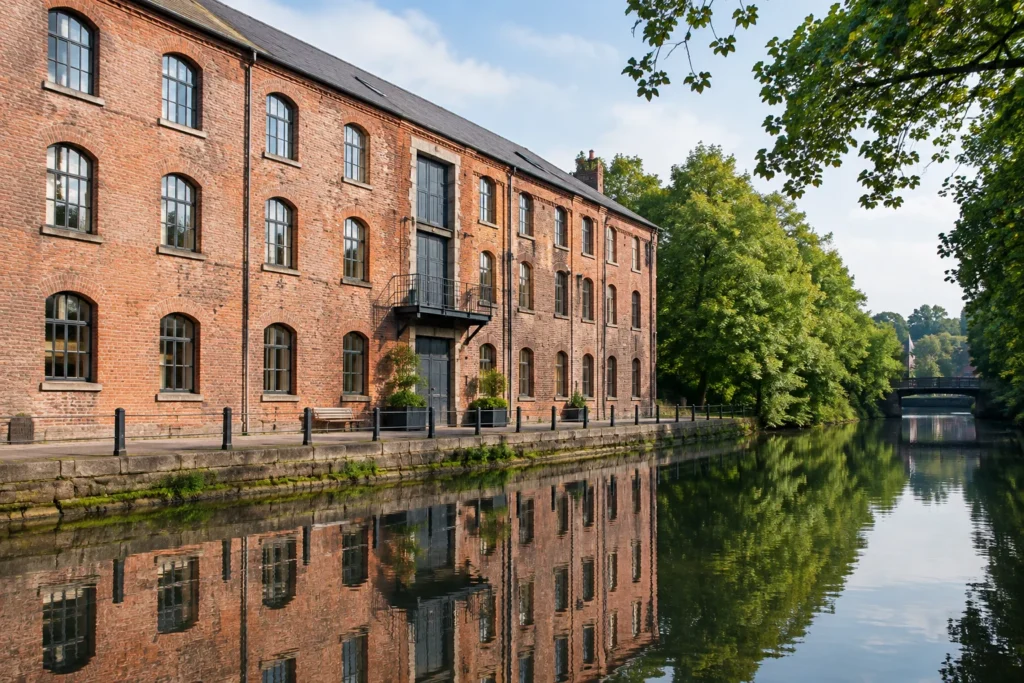
Costumes, stalls and Tangled Dance Company’s Cogs of Time featured at Portland Basin Museum on 24 October 2026, against a backdrop of Tameside’s industrial heritage.
Costumes and performance beside the canal
The Portland Basin steampunk event brought imaginative costumes, stalls and dance to Portland Basin Museum in Ashton-under-Lyne on Saturday 24 October 2026. Gemma Carter’s same-day report records visitors browsing stalls and watching Tangled Dance Company’s Cogs of Time. The Victorian-inspired event combined retro-futuristic style with a canalside museum setting rooted in Tameside’s industrial past.
The gathering has now taken place. Its costumes and performances were temporary attractions, distinct from the museum’s permanent displays and ordinary visiting arrangements.
Costumes and stalls at the completed Ashton event
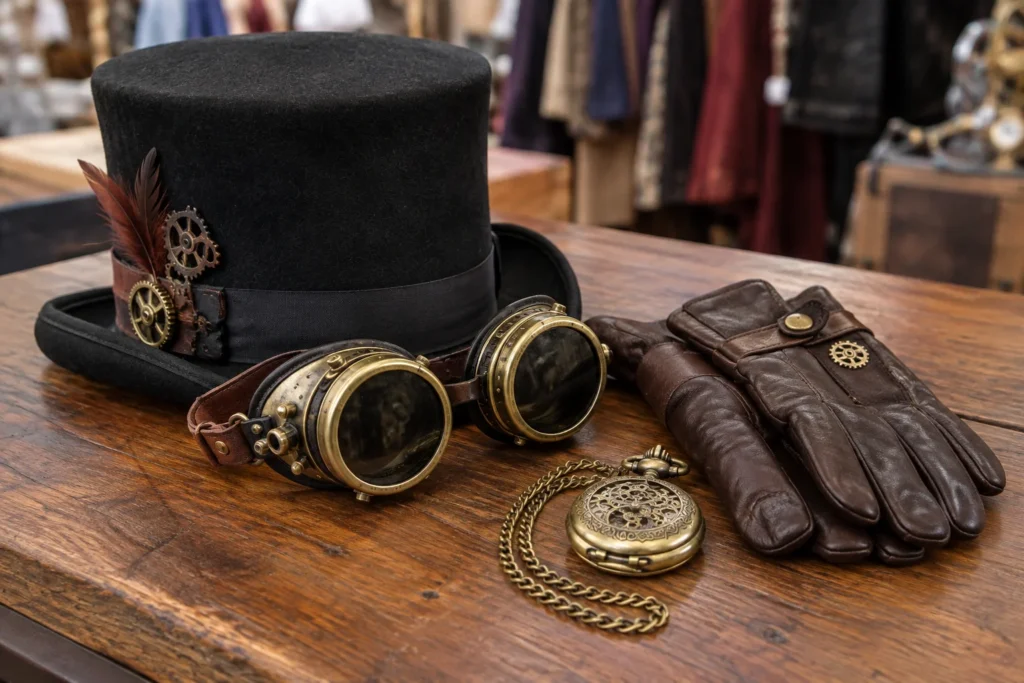
Carter’s report of the gathering, published by the Tameside Correspondent on 24 October, describes elaborate accessories and retro-futuristic creations alongside the costumes. It also confirms that visitors browsed stalls, placing shopping and creative dress at the centre of the day’s documented activity.
The official listing identifies Ashton Steampunk, a group of local enthusiasts, as the organiser. It advertised stalls selling steampunk clothing and accessories, giving visitors an opportunity to explore the style as well as see it worn.
The invitation extended beyond people already involved in steampunk. General visitors were welcome, and participation was optional. Dressing up was therefore a way to join in, rather than a condition of attending.
Portland Basin steampunk event: a Victorian view of the future
InTameside’s official event listing explains the theme through the idea of Victorian time travellers: imagining the future from a Victorian perspective. That distinction helps explain the combination of period-inspired clothing and invented technology.
This was a Victorian-inspired event, not a presentation of historically accurate Victorian dress. The reported retro-futuristic creations belonged to an imaginative theme rather than a reconstruction of one particular moment in history.
The advertised programme ran from 10.30am to 3.30pm on Saturday 24 October. Admission to both the event and the museum was free, with voluntary donations welcomed to support the museum. Those arrangements applied to the completed gathering; they are not an announcement of another edition.
The steampunk celebration offered several ways to take part: wearing a costume, browsing the stalls or watching the performance. The available reporting documents those activities without establishing an attendance total or traders’ sales.
Cogs of Time and the dance programme
Tangled Dance Company’s Cogs of Time supplied the confirmed performance element. Carter’s retrospective reports that visitors watched the production, establishing that it formed part of the day rather than remaining an item in advance publicity.
The official programme provides more detail about its intended form. It advertised a series of steampunk-inspired performances throughout the day, with mechanical-inspired movement and dancers interacting with visitors.
Those descriptions explain how the dance fitted the theme. The idea of mechanical movement connected a live performance with the event’s imagined world of Victorian-style invention. The programme presented the dancers as interacting with visitors, rather than simply describing a separate stage show.
The distinction between the programme and the retrospective matters. The listing describes the planned movement and interaction; the subsequent report confirms that visitors watched Cogs of Time. It does not provide a performance-by-performance account or a detailed record of the choreography.
Music also appeared in advance publicity. The council’s groups and courses programme advertised Mossley Ukulele Band. However, the retrospective does not confirm whether the band performed, so it remains an advertised component rather than a verified part of this account.
Dance, costumes and stalls together gave the steampunk celebration a cultural focus beyond dressing up alone. They brought different forms of creative activity into the same museum setting.
The industrial and social history behind the museum setting
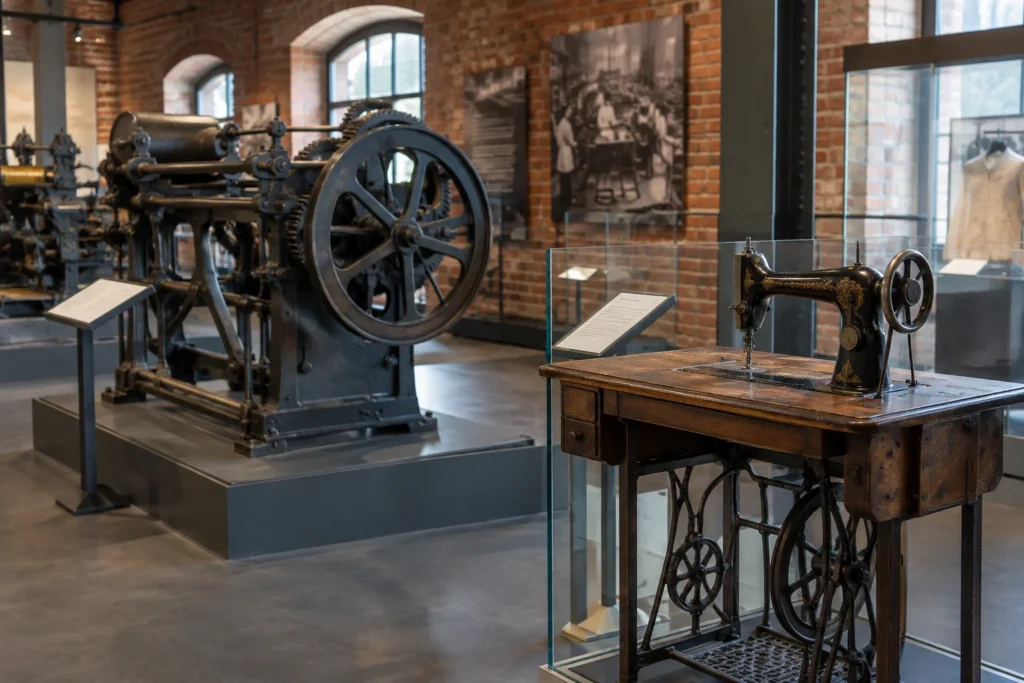
Portland Basin Museum occupies the restored nineteenth-century Ashton Canal Warehouse. The council describes a modern museum interior within a canalside setting, providing an industrial-era backdrop to the gathering’s Victorian-inspired imagination.
The building’s role as a museum is more recent. The council dates the museum’s opening to 1999 and describes permanent galleries alongside space for temporary exhibitions. Its collections extend well beyond the period that inspired the event.
A street from the 1920s
The Social History Gallery recreates a 1920s street. That is a later historical period than the Victorian perspective behind steampunk, so the two should not be treated as the same setting.
Domestic displays include the kitchen, parlour, back yard and outside toilet of a typical two-up two-down Tameside terrace. These place everyday home life alongside the wider story of local work and industry.
The street also includes a schoolroom, fish and chip shop, pawnbroker, grocer, chapel, pub and doctor’s surgery. Together, these settings cover education, shopping, worship, leisure and healthcare. The council presents them as opportunities for reminiscence and learning about earlier local life.
Machinery and manufacturing
Downstairs, the Made In Tameside Industrial History Gallery explores manufacturing through machinery and tools. Its displays include machinery associated with National Gas and Oil Company, Joshua Heap and John Summers Iron Works.
The collections also include Eli Whalley donkey-stone manufacturing equipment, hatting and gloving tools, and Jones sewing machines. Displays about cotton, coal mining and agriculture broaden the account beyond any single trade.
These are records of actual local industries, distinct from the imagined inventions associated with steampunk. Their presence gives the museum an industrial context without making its collection objects props in the event.
The Industrial History Gallery leads towards the canal wharf and historic waterwheel. That connection places the indoor collections alongside the waterside surroundings of the former warehouse.
A longer Tameside story
Another display, Tales of Tameside, covers the period from the Celts to the Industrial Revolution. Its subjects include the Black Knight legend, Norman chain mail and finds from Dukinfield Hall and Denton Hall.
Roman coins from Denton and glass from a seventeenth-century furnace in Haughton Green provide further examples of the collection’s range. They show that the museum’s historical scope reaches far beyond Victorian industry.
These permanent displays explain the venue’s wider significance. They are museum background, not evidence that particular event participants visited those galleries or that machinery operated during the gathering.
Visiting Portland Basin beyond the steampunk event
The museum’s ordinary arrangements are separate from the expired event timetable. As checked on 25 October 2026, the council published opening hours of Tuesday to Sunday, 10am to 4pm, with free admission.
Mondays were normally closed except bank holidays. The council also listed Christmas and New Year exceptions, making its current opening information important when planning a visit around those dates.
The address is Portland Place, Ashton-under-Lyne, OL7 0QA. The published museum telephone number is 0161 342 5480. The council describes access by car, bus and train, but its museum page does not specify individual services or journey times.
Access and parking
The council describes the museum as accessible and lists free parking with disabled spaces. It also gives an important qualification: the cobbled car park can mean wheelchair users need assistance transferring from their car.
That warning should be considered alongside the general accessibility description. A social story, accessibility guide, access policy and floor plan are available through the museum’s information page to help visitors prepare.
The council also warns that parking can become busy on event days and during school holidays. That is published visitor advice, not an observation about parking conditions at the October gathering.
Facilities for a museum visit
Facilities listed on 25 October 2026 included a museum shop, baby changing, picnic tables and Bridge View Cafe. Children’s trails and activities were also listed, alongside the Nuts and Bolts educational play area for children under five.
The museum’s educational provision includes school workshops and loan boxes. These sit within its wider role as a place to explore local history, rather than forming part of the reported steampunk programme.
The October event brought a temporary layer of costume, performance and creative activity to that setting. The museum’s permanent galleries tell a broader story about Tameside’s homes, workplaces and communities.
For a future museum visit, consult the council’s Portland Basin Museum visiting information for current opening and access arrangements.
Related reading
Questions about the event and museum
When did the Portland Basin steampunk event take place?
It took place on Saturday 24 October 2026. Advertised hours were 10.30am to 3.30pm, and Gemma Carter’s same-day report confirms that the gathering happened.
Who organised the event?
The official event listing names Ashton Steampunk, a group of local enthusiasts, as the organiser.
Did visitors have to dress up?
No. The official listing welcomed enthusiasts and general visitors, with dressing up and participation optional.
Was admission free?
Admission to both the museum and the event was free. Voluntary donations to support the museum were welcomed.
What was Cogs of Time?
Cogs of Time was Tangled Dance Company’s steampunk-inspired production. The programme described mechanical-inspired movement and visitor interaction, while the retrospective confirms that visitors watched it.
Did Mossley Ukulele Band perform?
The council advertised Mossley Ukulele Band in its advance programme. The retrospective does not confirm whether the band performed.
What history does Portland Basin Museum cover?
The museum explores Tameside’s social and industrial history through a recreated 1920s street, manufacturing collections and Tales of Tameside, which spans the Celts to the Industrial Revolution.
What should visitors check before visiting the museum?
Check the council’s current opening and accessibility information. As checked on 25 October 2026, ordinary published hours were Tuesday to Sunday, 10am to 4pm, with free entry. The council warns that cobbles can complicate wheelchair transfers from cars.