
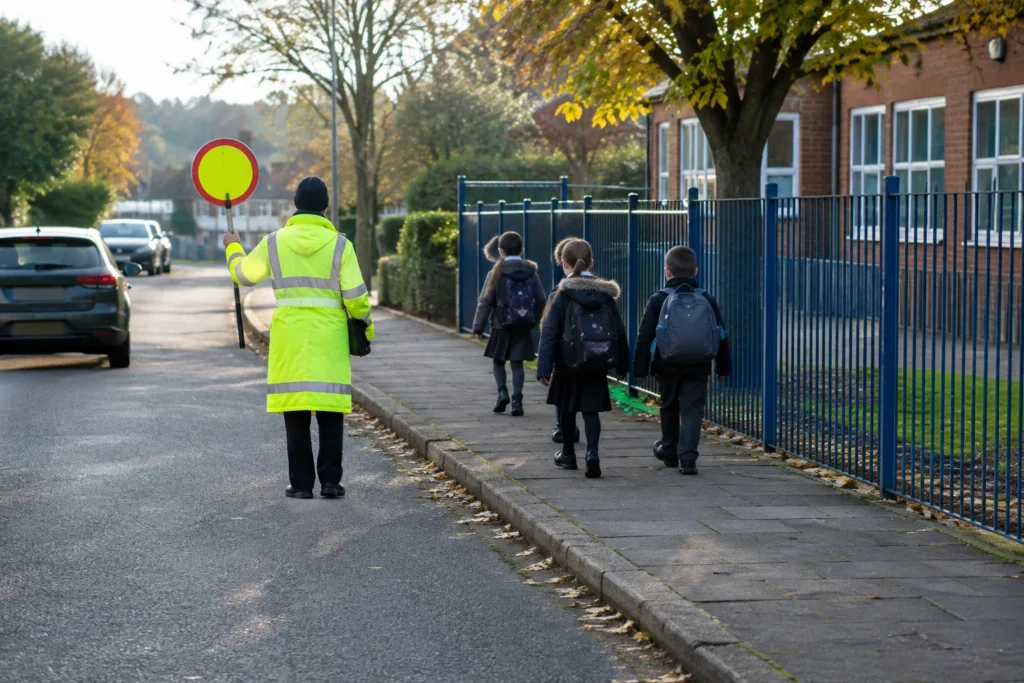
Rochdale Borough Council says police seized a moped and a silver Skoda after two failures to stop for a school crossing patrol on Bury Old Road. Nobody was injured.
Police action follows two failures to stop
Police seized a moped and a silver Skoda following two failures to stop for a Heywood school crossing patrol, Rochdale Borough Council reported on 23 October 2026. The incidents happened on Bury Old Road on 13 and 14 October. The patrol officer had to move aside while already in the road, but nobody was injured.
The council’s account describes vehicle seizures following police evidence-gathering, not convictions or sentences. The Bury Old Road crossing incidents also highlight drivers’ legal duty to stop when a school crossing patrol displays its sign.
Heywood school crossing patrol: vehicles seized
According to the council’s account of the Bury Old Road crossing incidents, the patrol officer, identified as Barry, was already in the road when the drivers failed to stop. He had to move out of their way.
The release identifies the vehicles as a moped and a silver Skoda. It does not establish which vehicle was involved on each date, so neither can be assigned to a particular incident from that account.
Police gathered evidence, including witness statements, before using section 59 of the Police Reform Act 2002. GMP traffic PCSO team leader Paul Clarke said seizure was considered appropriate after the circumstances and evidence had been assessed.
The incident dates and enforcement dates must be distinguished. The failures to stop occurred on 13 and 14 October 2026, while the council published its report on 23 October. The release does not specify when police seized the vehicles.
It also does not identify the drivers or set out any subsequent court proceedings. Vehicle seizure is the enforcement action reported here; it should not be read as a conviction or a sentence imposed by a court.
Nobody was injured, according to the council. Its account nevertheless describes Barry having to take evasive action while carrying out his roadside role.
Cameras and visibility measures across Rochdale borough
The council placed the Heywood incidents within a wider borough picture. In its 23 October release, it reported 137 failures to stop for school crossing patrols across Rochdale borough over five years.
That total is not confined to Heywood or Bury Old Road. The release provides no annual breakdown or methodology, so it does not establish whether incidents are becoming more or less frequent. It is a cumulative figure attributed to the council, rather than evidence of a measured trend.
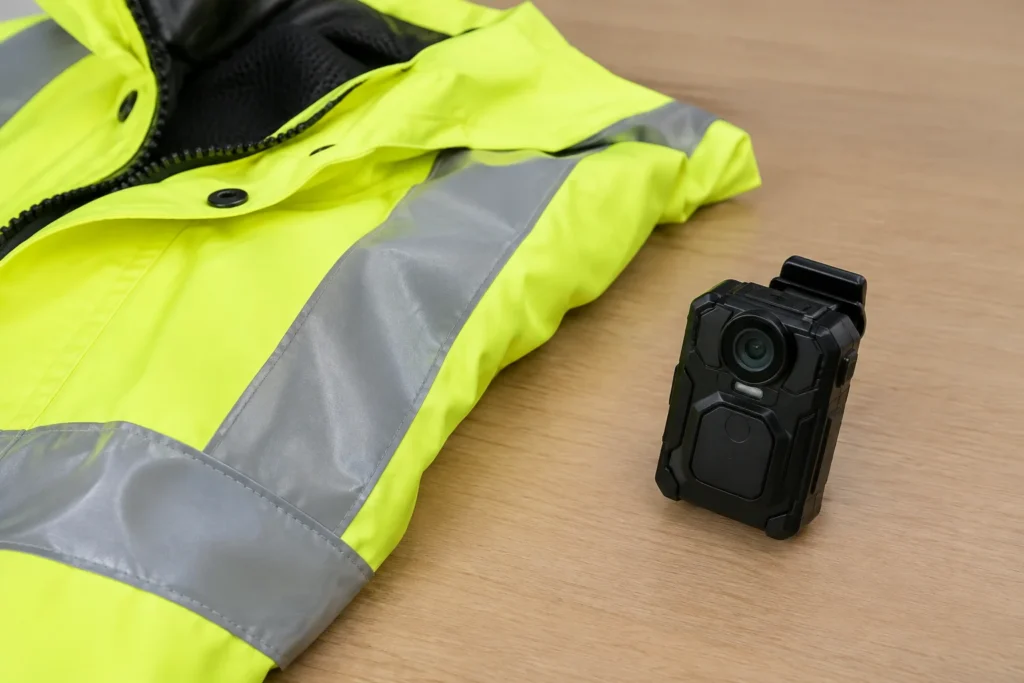
The same release described measures intended to support school crossing safety. It said body-worn cameras were being used at hotspots to deter dangerous driving and provide evidence that could support prosecutions. Patrol officers had received more visible coats, and the council said incidents would continue to be reported to police.
These were the purposes and arrangements described on 23 October 2026. The release did not provide results showing that the cameras or clothing changes had reduced failures to stop, or report prosecution outcomes arising from their use.
What section 59 allows and what changed in June
The police power cited in the Heywood school crossing patrol report has specific conditions. Section 59 of the Police Reform Act 2002 concerns certain uses of motor vehicles that cause, or are likely to cause, public alarm, distress or annoyance.
A uniformed constable must reasonably believe that the vehicle is being, or has been, used contrary to section 3 or section 34 of the Road Traffic Act 1988. Those provisions concern careless or inconsiderate driving and prohibited off-road driving. The public alarm, distress or annoyance condition must also be met.
The power is therefore not an automatic consequence of every failure to obey a crossing patrol. The statutory conditions matter, alongside the evidence and circumstances. In the Heywood case, the council described an assessment made after police collected evidence.
Section 59 allows a uniformed constable to order a moving vehicle to stop and to seize and remove it. It also provides associated powers of entry and reasonable force for those purposes. However, it does not authorise entry into a private dwelling house.
Its definition of a motor vehicle includes mechanically propelled vehicles that are not intended or adapted for road use. The provision therefore extends beyond vehicles designed for ordinary road journeys.
A Home Office circular published on 29 June 2026 explains an important amendment. Section 8 of the Crime and Policing Act 2026 repealed section 59(4) and (5), removing the requirement for a uniformed constable to give a warning before using the seizure power.
The change took effect on 29 June 2026, before the October incidents. It amended an existing power rather than creating section 59. The underlying conditions for seizure still apply.
The legislation page could not be accessed directly for this report. The account of the June amendment rests on the Home Office circular, which expressly confirms the removal of the prior-warning requirement.
Stopping and parking rules for school crossing safety
The immediate rule for drivers is clear. Highway Code rule 210 says drivers must stop when a school crossing patrol displays a Stop for children sign. It cites section 28 of the Road Traffic Regulation Act.
This duty is separate from the conditions governing police vehicle seizure. Drivers must obey the patrol’s sign; whether section 59 can be used depends on the statutory requirements described above.
The surrounding guidance addresses how drivers approach schools. Rule 208 advises slow driving near schools and particular awareness of young pedestrians and cyclists. When school warning signals are flashing, it advises driving very slowly until clear of the area. Rule 209 advises careful, slow driving past stationary school buses.
Parking and stopping rules also form part of school crossing safety, although the council’s account does not report parking offences in these two incidents. The Highway Code’s waiting and parking rules distinguish legal prohibitions from advisory guidance.
Under rule 238, drivers must not wait, park or stop to collect or set down passengers on school entrance markings when upright signs indicate a stopping prohibition. Dropping a child off is included in that restriction.
The same rule prohibits waiting or parking on yellow lines during their operating times. Double yellow lines indicate a waiting prohibition at any time, even without upright signs.
Rule 240 prohibits stopping or parking on pedestrian crossings, including their zigzag areas. Rule 242 prohibits leaving a vehicle in a dangerous position or where it causes unnecessary obstruction of the road.
Rule 243 uses advisory wording about other locations. It says drivers should not stop or park near school entrances, at dropped kerbs serving wheelchair users, or where emergency access would be prevented, except when forced to do so by stationary traffic.
These distinctions matter. Advice about choosing where to stop should not be confused with the mandatory duty to obey a patrol’s sign or a signed stopping prohibition.
How patrol-controlled crossings support the school journey
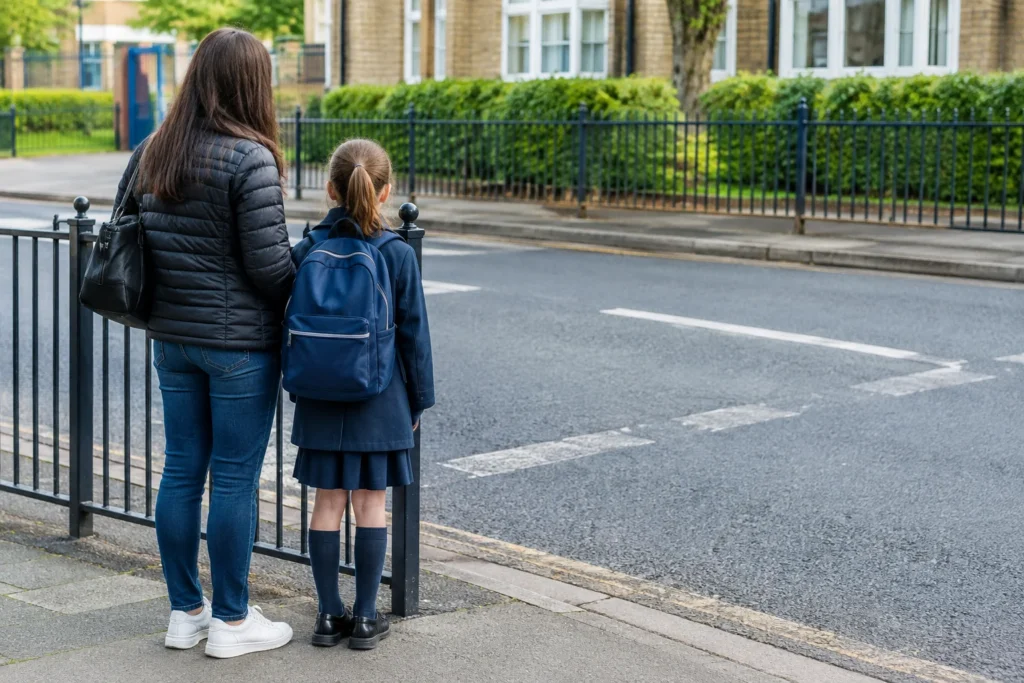
Pedestrians also have specific guidance at a controlled crossing. Highway Code rule 29 says they should wait for the authorised person’s signal before crossing. They should always cross in front of the school crossing patrol, rather than behind it.
Rule 7 sets out the wider Green Cross Code. It recommends using a nearby crossing where available, including a patrol-controlled crossing. Where a crossing place must be chosen, clear views, looking and listening, and allowing sufficient time to cross are central considerations.
The guidance does not set a universal age at which children can safely travel independently. Children should learn and be able to use the Green Cross Code before going out alone. Readiness varies, and parents or carers decide when independent road use is safe.
The description of Rochdale’s School Crossing Patrol Service sets out its purpose as supporting children and parents on the school journey. It describes roadside, term-time patrol work, legal powers to stop traffic, and guidelines covering uniform and operation. This service description does not establish coverage at every school or crossing.
For families using the Heywood school crossing patrol or another controlled crossing, the practical next step is to review the official pedestrian crossing guidance: wait for the patrol’s signal and cross in front of the officer.
Related local news
Questions about the crossing incidents and road rules
What happened at the Heywood school crossing patrol?
Rochdale Borough Council reported two failures to stop on Bury Old Road on 13 and 14 October 2026. The patrol officer, Barry, had to move aside while already in the road. Nobody was injured.
Which vehicles were seized, and were the drivers convicted?
The council reported that police seized a moped and a silver Skoda. Its release did not report convictions or sentences, identify the drivers or specify the seizure dates.
How many failures to stop has Rochdale Council reported?
The council reported 137 failures to stop across Rochdale borough over five years. This is not a Heywood-only figure, and no annual breakdown was provided to establish a trend.
What is section 59 of the Police Reform Act 2002?
Section 59 provides vehicle stopping and seizure powers where a uniformed constable reasonably believes specified driving conditions and conditions involving public alarm, distress or annoyance are met.
Must police give a warning before using section 59 seizure powers?
The Home Office says the prior-warning requirement was removed on 29 June 2026. The underlying statutory conditions for using the power still apply.
Must drivers stop for a school crossing patrol?
Yes. Highway Code rule 210 says drivers must stop when a school crossing patrol displays a Stop for children sign.
Can drivers stop on school entrance markings to drop children off?
Not when upright signs indicate a stopping prohibition. Highway Code rule 238 includes stopping to collect or set down passengers. Stopping or parking on pedestrian crossings and their zigzag areas is also prohibited.
How should pedestrians use a patrol-controlled crossing?
Highway Code rule 29 says pedestrians should wait for the authorised person’s signal before crossing and always cross in front of the school crossing patrol.