
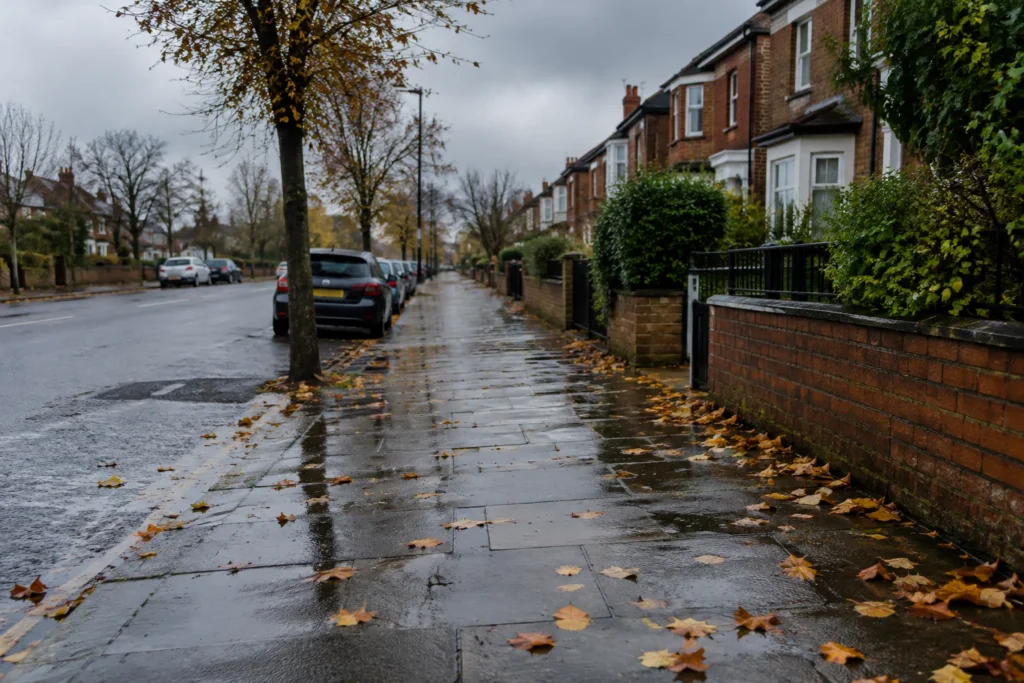
Storm Boelo disrupted rail connections serving Greater Manchester on 25 October 2026. Northern announced travel and ticket arrangements, while electricity engineers tackled damage across the wider North West.
Rail warnings and electricity repairs on 25 October
Storm Boelo caused rail disruption affecting Greater Manchester connections on 25 October 2026, with Northern strongly advising against travel in an 11:13 update. Separately, electricity engineers were restoring supplies across the wider North West, particularly in Cumbria and Lancashire. The regional power response figures were not Greater Manchester outage totals.
Network Rail reported flooding and damage to overhead lines at several North West locations. Northern announced ticket flexibility for passengers affected that Sunday. These dated statements explain the Greater Manchester rail disruption and wider response; they should not be read as confirmation of later service conditions or restoration progress.
What the Met Office forecast for Storm Boelo
The Met Office had set out the approaching storm’s risks in a forecast release dated 23 October 2026. Amber wind warnings covered Scotland and parts of Northern Ireland and northern England for Saturday night and Sunday.
Wider yellow warnings extended farther south into England and north Wales and also covered Northern Ireland. The geographical distinction matters: the release did not establish an amber warning specifically for Greater Manchester.
Within the amber warning area, forecasters expected widespread gusts of 60–70mph. Gusts could reach 80mph in exposed coastal locations. Those figures described forecast conditions in the stated areas, not measured wind speeds in Manchester or elsewhere in the city-region.
Chief forecaster Jason Kelly separately described possible gusts of 50–60mph elsewhere, with heavy rain creating an additional hazard in the north. Wind and rain therefore formed separate parts of the forecast, ahead of the rail flooding and overhead-line damage subsequently reported by Network Rail.
Boelo followed Storm Austen, which affected parts of the UK on Friday 23 October. The Met Office expected unsettled weather to continue into the following week. Its release referred to a northern wind warning already issued for Tuesday and only tentative signs of more settled conditions later.
That outlook was a forecast rather than a report of what happened after Sunday. It did not establish when any individual rail route would reopen or when an electricity repair would be completed.
North West rail damage and Greater Manchester connections
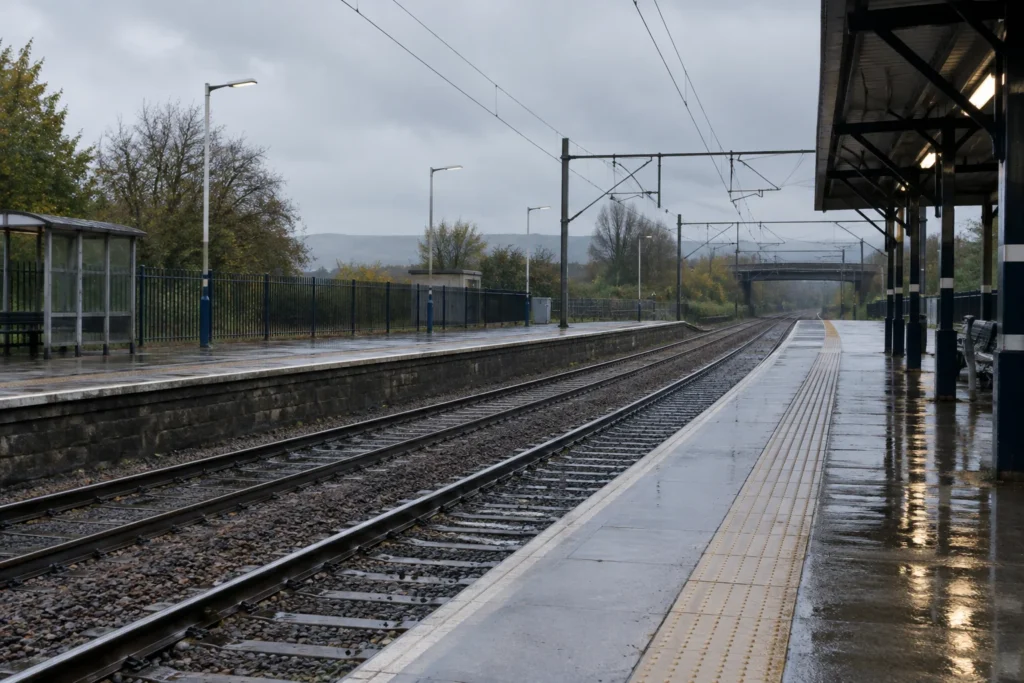
In its 25 October account of North West rail damage, Network Rail said torrential rain and strong winds had flooded tracks and brought down overhead lines that power trains. Several locations across the region were affected.
It expected delays, alterations and cancellations for much of the day in affected areas. Some operators were running no services. This was a regional account, not a statement that every Greater Manchester train had stopped or that every station was closed.
Engineers had worked overnight inspecting affected routes. Their work included removing fallen trees and other debris, managing flooding and assessing overhead-line damage. These were distinct tasks within the response, rather than one repair affecting a single location.
Network Rail also said temporary speed restrictions were being used where necessary to keep trains operating safely in difficult conditions. Its statement therefore described both services unable to run and efforts to maintain operations where conditions allowed.
The local passenger relevance was clear from connections listed against Northern’s severe-weather notice:
- Manchester Airport–Blackpool North.
- Manchester Oxford Road–Bolton–Wigan–Southport.
- Rochdale–Wigan–Headbolt Lane.
These connections linked the wider North West disruption to journeys serving Greater Manchester. Their inclusion in the notice did not establish the status of every departure, station or section of track. Passengers needed service-specific information rather than a blanket assumption about the whole route.
North West route director Chris Wright said teams were assessing damage, clearing debris and reopening routes. He also warned that continuing extreme weather meant conditions were changing quickly.
Network Rail directed passengers to National Rail and their individual train operator’s disruption information. Its account explained the infrastructure problems behind the disruption, while operator notices provided the travel arrangements relevant to passengers.
Northern travel advice and ticket arrangements
The key Northern travel advice came in its 11:13 update on 25 October 2026. The operator strongly advised against travel across its entire network that Sunday, saying several routes could not operate.
Northern also said replacement road transport could not be provided. That was part of its network-wide announcement, rather than a promise that buses would be available for particular Greater Manchester journeys.
The operator expected cancellations or delays to continue through the end of Monday 26 October. This was an expectation of disruption, not confirmation that every Northern service would be cancelled throughout Sunday and Monday. The distinction is important when interpreting a notice covering a large network.
Ticket flexibility for affected passengers
For tickets dated Sunday 25 October, Northern announced flexibility to travel on any Northern service on Monday 26 or Tuesday 27 October. Its notice said passengers would not need an additional payment or a new ticket.
The arrangement applied to Northern services. It was not a general announcement allowing travel with every other operator, and the stated dates should remain attached to the concession. A ticket arrangement announced for this storm should not be treated as an ongoing policy for later disruption.
The flexibility gave affected passengers two later travel dates under the notice. However, Northern also warned that Monday services could change. Permission to use a ticket on a later date was therefore separate from confirmation that a particular train would run.
Journey planners and Delay Repay
Northern warned that journey planners might not immediately reflect changes. During the disruption, a displayed itinerary could therefore lag behind the operator’s announcements. Its dated warning is relevant when comparing a planned journey with the service information issued that day.
The notice also directed passengers delayed by at least 15 minutes to retain their tickets and use Northern’s Delay Repay process. It did not announce automatic payments to everyone affected, and ticket flexibility was separate from the compensation process.
For anyone reviewing the Greater Manchester rail disruption, the sequence is clear: infrastructure damage prompted widespread operational changes, followed by Northern travel advice and passenger arrangements. Anyone making a journey should consult the operator’s latest notice rather than rely solely on the 11:13 statement reproduced here.
Power restoration across the wider North West
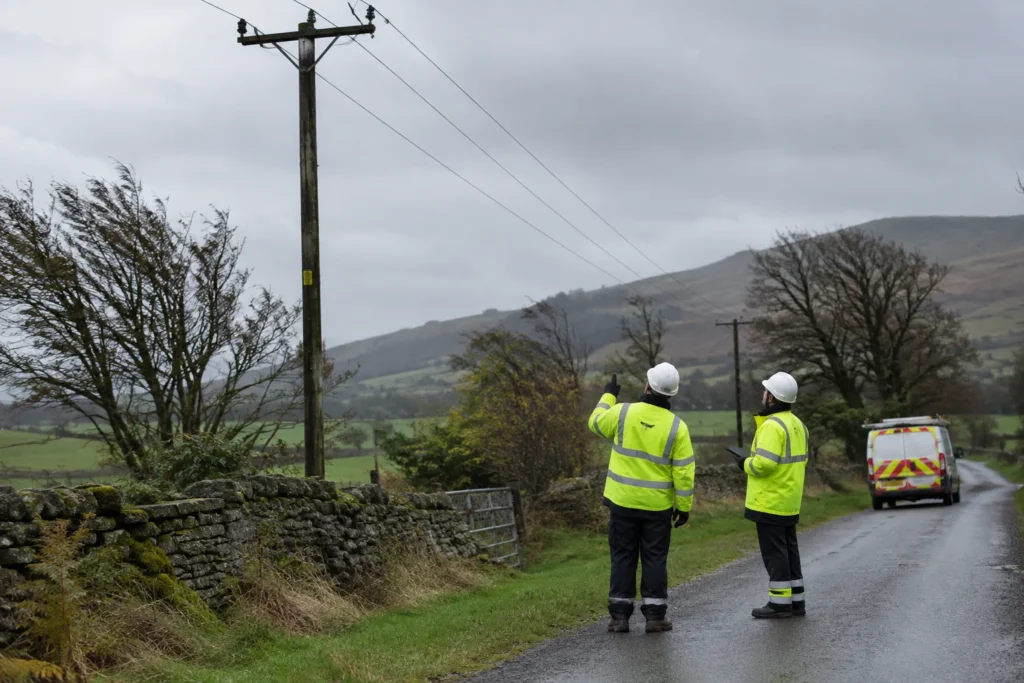
Storm Boelo also prompted a substantial electricity repair operation. In its 25 October response statement, SP Electricity North West said it had restored supplies to more than 30,000 properties and was working to reconnect a remaining 22,000.
The operator recorded more than 250 instances of network damage. It described branches and debris damaging overhead lines in Cumbria and Lancashire. These figures concerned its wider regional response and should not be presented as a count of homes or businesses without power in Greater Manchester.
The statement also explained why some repairs could not proceed immediately. High winds made climbing electricity poles unsafe, limiting the overhead work engineers could undertake while those conditions persisted.
Instead, teams were concentrating on remotely switching affected supplies to other parts of the network. That work was distinct from repairing damaged overhead equipment. It formed part of the restoration response while engineers waited for conditions that would allow safe access.
What the restoration estimate meant
The operator set expected restoration times to 18:00 on Tuesday 27 October as a worst-case scenario following customer feedback. That time was not a guaranteed deadline. Nor did it mean that every affected property was expected to remain disconnected until Tuesday evening.
SP Electricity North West said repair work would accelerate when winds allowed engineers to climb safely. It also said restoration estimates would be updated. The estimate therefore belonged to the circumstances described in the 25 October statement, rather than establishing the eventual restoration time for each property.
Contact and support during outages
The operator reported receiving more than 5,500 contact-centre calls since the previous evening. It said additional staff were handling calls and making proactive contact with customers. Those figures described the regional response, not a measured Greater Manchester total.
Customers needing extra support were asked to contact the operator. Its safety advice was to keep clear of damaged equipment and report damage or outages through its website or freephone 105. That advice accompanied the repair update and the explanation of weather-related access restrictions.
The rail reports and regional power response describe different parts of Storm Boelo’s impact on 25 October. For a journey or an affected electricity supply, the relevant operator’s latest information remains the next step: dated warnings and estimates do not establish live conditions.
Related reading
Frequently asked questions
What weather did the Met Office forecast for Storm Boelo?
Its 23 October 2026 release forecast gusts of 60–70mph within the amber warning area, potentially reaching 80mph in exposed coastal locations. Heavy rain was an additional hazard in the north.
Were those wind speeds recorded in Greater Manchester?
No. Those figures were forecasts for specified warning areas and exposed locations. The release did not establish those speeds as Greater Manchester observations or confirm an amber warning specifically for the area.
Which Greater Manchester connections appeared in Northern’s storm notice?
Northern’s 25 October 2026 notice included Manchester Airport–Blackpool North, Manchester Oxford Road–Bolton–Wigan–Southport and Rochdale–Wigan–Headbolt Lane. Inclusion did not mean every station or departure was closed.
What rail damage did Network Rail report?
On 25 October 2026, Network Rail reported flooded tracks and damaged overhead lines at several North West locations. Engineers inspected routes, cleared trees and debris, managed flooding and assessed damage.
What did Northern advise passengers on 25 October?
At 11:13 on 25 October 2026, Northern strongly advised against travel across its network that Sunday. It said several routes could not operate and replacement road transport could not be provided.
What ticket and Delay Repay arrangements did Northern announce?
Northern’s 11:13 notice on 25 October 2026 allowed tickets dated that day to be used on Northern services on 26 or 27 October without extra payment or a new ticket. It directed passengers delayed by at least 15 minutes to retain tickets and use its Delay Repay process.
Were the electricity outage figures Greater Manchester totals?
No. SP Electricity North West’s 25 October 2026 figures described its wider regional response, with damage reported in Cumbria and Lancashire. They did not provide a Greater Manchester outage total.
Was 18:00 on 27 October a guaranteed restoration time?
No. In its 25 October 2026 statement, the operator described that time as a worst-case estimate and said estimates would be updated. It advised keeping clear of damaged equipment and reporting damage or outages online or through freephone 105.