

A resident has reported disrupted sleep and shaking at home during overnight HGV diversions. National Highways and Tameside Council have explained the route choice, while official updates set out the closure programme.
Overnight traffic prompts resident complaint
Mottram HGV diversions have prompted complaints from a resident who says overnight lorries disrupt sleep and cause shaking inside his home. National Highways and Tameside Council say the A57 was selected because it accommodates motorway traffic, including heavy goods vehicles. The reported effects remain the resident’s account, rather than independently measured findings.
The complaint concerns traffic diverted during A57 Link Roads construction. A report published on 24 October 2026 sets out the resident’s experience and both agencies’ responses. Official project information checked on 25 October provides the closure timetable and forthcoming changes.
Mottram HGV diversions and residents’ reports
John Sullivan, who lives just off Mottram Road in Hyde, told reporter George Lythgoe that disturbance began in July. He attributed disrupted sleep and shaking inside his home to lorries using the overnight diversion.
In the Tameside Correspondent’s report of the complaint, Sullivan claimed cameras recorded 461 HGVs and 3,020 cars between 5 and 6 October 2026. These are figures he supplied, not an independently verified traffic survey.
The dates matter. The article appeared on 24 October, but the vehicle figures relate to an earlier period. Sullivan’s account places the start of the disturbance in July; it does not establish the same traffic level on every night since then.
Sullivan wanted HGV traffic directed via the M62 and M60 instead. He cited their use during Woodhead closures as the basis for his suggestion. That proposal is not an approved replacement for the published diversion, and no comparative assessment establishes it as a preferable route for these works.
His account describes the effect he says the traffic has on his household. It does not, by itself, establish measured noise levels, vibration levels or medical effects. The distinction allows the complaint to be reported clearly without treating personal testimony as a technical finding.
Why the A57 was selected for diverted traffic
National Highways programme manager Karen Cliffe told the reporter that staff had met the Sullivans and maintained dialogue with them. She said National Highways and Tameside Council had selected the A57 because it accommodates motorway traffic, including HGVs.
That explanation addresses the agencies’ reason for choosing the road. It does not amount to a finding that the diverted traffic causes no disturbance to people living nearby.
Tameside Council acknowledged that increased traffic, particularly heavy goods vehicles, could cause disturbance. Its spokesperson described Mottram Road as part of the strategic route network and said the authority was liaising over practicable mitigation.
The spokesperson also said the council was obliged to agree to the diversion. That is the council’s stated position; it should not be read as an independent legal conclusion about its powers or responsibilities.
The responses therefore cover two separate issues: the route’s role in carrying diverted motorway traffic, and the consequences for neighbouring households. The agencies defended the route selection while describing contact with residents and discussion of mitigation.
Neither response, as reported, announced that the M62/M60 suggestion had been adopted. Nor did the responses establish that the complaint had been resolved. The published arrangement remained an A57 diversion at the 25 October check.
Confirmed closure schedules and November changes
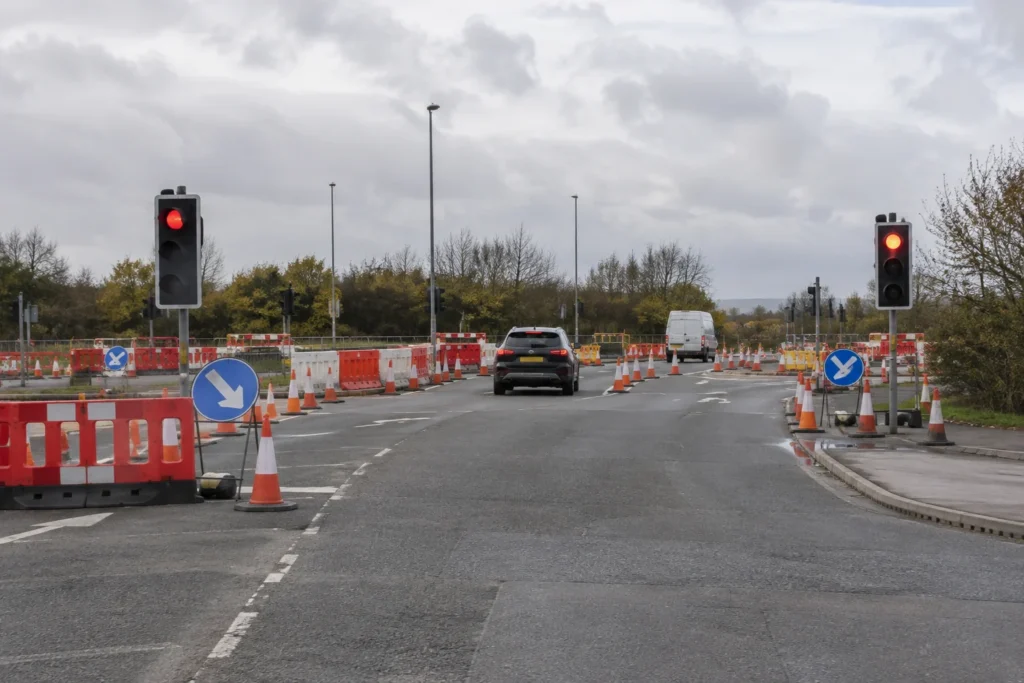
As checked on 25 October 2026, National Highways lists M67 overnight closures between junctions 3 and 4 in both directions. The published programme runs Monday–Friday, from 8pm to 6am, between 13 July and the end of December 2026.
The official A57 Link Roads project updates identify A57 Mottram Road as the diversion route. The junction 4 roundabout remains passable under traffic signals. Stockport Road traffic between junction 4 and Underwood Road is diverted via Underwood Road.
These arrangements concern different movements around the works. The motorway closure, continued passage through the roundabout and Stockport Road diversion should not be treated as a single complete closure of every approach.
What the October update says
National Highways’ update dated 7 October describes underground infrastructure installation at junction 4, with work taking place during the day and overnight. From 2 November, traffic management is scheduled to change as work moves to the roundabout’s southern side.
A separate closure is scheduled for Old Road between Hall Drive and Roe Cross Road. It is due to begin at 8pm on 6 November and end at 6am on 9 November, allowing a temporary layout switch. National Highways says access to properties and access for emergency services will be maintained.
Both November changes were future arrangements on 25 October. They should not be described as completed work or evidence that the overnight disturbance has ended.
The newspaper report mentions a possible mid-November finish for the closures. However, the official schedule checked on 25 October still extends to the end of December. An earlier finish is therefore not confirmed by that programme.
For anyone planning around the M67 overnight closures, the distinction is practical: a possible earlier finish is not the same as a published change to the closure dates.
Noise assessment and construction safeguards

The scheme’s environmental documents provide context for noise management, but they serve different purposes. The consent order sets requirements for construction. An earlier preliminary assessment identifies potential effects and proposed responses; it is not a record of present conditions outside Sullivan’s home.
Requirements in the consent order
Schedule 2, requirement 4 of the development consent order requires an approved second-iteration environmental management plan and construction in accordance with it. Its components include plans for noise and vibration, community engagement, nuisance and traffic management.
The plan must incorporate construction-stage environmental measures and mechanisms for consultation on material changes. Those requirements establish a management framework. They do not, on their own, demonstrate whether a particular complaint has been investigated or whether a particular measure has been implemented.
The order specifies ordinary construction hours of 7.30am–6pm on weekdays and 7.30am–4pm on Saturdays. It also provides exceptions, including specified night closures, disruptive deliveries, junction tie-ins, overnight traffic management and emergencies. The daytime hours therefore do not mean all night work is prohibited.
Outside-hours activities require advance notification to the relevant local authority. For the specified emergency and equipment-repair exceptions, notification must instead take place as soon as practicable.
What the earlier noise assessment identified
The preliminary environmental report, reflecting information available in September 2020, recognised potential short-term significant adverse construction noise and vibration effects.
It identified noise sources including construction plant, underpass construction, site HGV movements and diverted traffic. Piling was identified separately as a potential vibration source. Those categories should not be confused with a finding about what caused the shaking reported by Sullivan.
For anticipated full-carriageway night closures, the report proposed studying diversion noise within 25 metres of the route’s kerb. It said diversion routes could produce significant adverse effects, but the routes had not yet been identified and required assessment in the subsequent environmental statement.
Suggested measures included traffic management, noise fencing, a site contact and proactive complaint handling. Other proposals covered maintained site access surfaces, switching off idle machinery, reducing vehicle rattles, quieter equipment and keeping noisy stationary plant away from sensitive properties.
These were proposed construction measures in a historical assessment. They are not evidence that the same measures are operating on the current public diversion. Nor does the preliminary report provide current noise readings or medical evidence about the reported disturbance.
The documents described here do not establish compliance or breach in relation to this complaint. Resolving those questions would require the applicable management arrangements and evidence of what happened in practice.
For project enquiries, National Highways lists A57linkroads@nationalhighways.co.uk and 0300 123 5000, as checked on 25 October 2026. Residents seeking clarification about the diversion or their complaint can use those project contacts.
What the link roads are intended to deliver
The A57 Link Roads scheme comprises a dual carriageway from M67 junction 4 to Mottram Moor, followed by a single carriageway to Woolley Bridge. National Highways describes its aims as relieving congestion and improving journeys between Manchester and Sheffield.
Those are intended benefits of the completed scheme, not outcomes already demonstrated by the construction works. They are also separate from the immediate question of how traffic is managed while building takes place.
As checked on 25 October 2026, National Highways lists the construction start as December 2024 and completion within Road Period 3, covering 2026–2031. Its project page does not confirm a specific opening date and lists the cost as TBC.
The consent order also looks beyond construction. It requires a third-iteration environmental management plan by construction handover, including long-term aftercare, monitoring and maintenance commitments for environmental mitigation. These later responsibilities are distinct from the arrangements governing current works.
For now, Mottram HGV diversions remain a dispute about reported overnight disturbance and the route chosen to carry motorway traffic. Sullivan’s account, the agencies’ explanations and the official closure programme provide different parts of that picture. None establishes that a revised diversion has been agreed or that the complaint has been resolved.
Related local news
Questions about the diversions
What disturbance has been reported during the Mottram diversions?
John Sullivan, who lives just off Mottram Road in Hyde, told the Tameside Correspondent that overnight lorries disrupted sleep and caused shaking inside his home. These are his reported experiences, not independently measured findings.
How many vehicles did the resident report?
Sullivan claimed cameras recorded 461 HGVs and 3,020 cars between 5 and 6 October 2026. Those figures have not been independently verified against the underlying camera records.
Why was the A57 chosen for diverted traffic?
National Highways said it selected the A57 with Tameside Council because the road accommodates motorway traffic, including HGVs. The council described Mottram Road as part of the strategic route network.
When are the M67 overnight closures scheduled?
As checked on 25 October 2026, National Highways lists closures between junctions 3 and 4 in both directions, Monday–Friday from 8pm to 6am, running from 13 July to the end of December 2026.
What road changes are scheduled for November?
As checked on 25 October 2026, junction 4 traffic management is scheduled to change from 2 November. Old Road between Hall Drive and Roe Cross Road is then scheduled to close from 8pm on 6 November until 6am on 9 November, with property and emergency access maintained.
Have the reported noise and health effects been independently verified?
No independent verification is established by the reporting and documents discussed here. The September 2020 preliminary environmental assessment identified potential effects, but it is not current acoustic monitoring or medical evidence about these complaints.
Who can residents contact about the A57 Link Roads project?
As checked on 25 October 2026, National Highways lists A57linkroads@nationalhighways.co.uk and 0300 123 5000 for project enquiries.
When is the A57 Link Roads scheme due to be completed?
As checked on 25 October 2026, National Highways lists completion within Road Period 3, 2026–2031. Its project page does not confirm a specific opening date.