
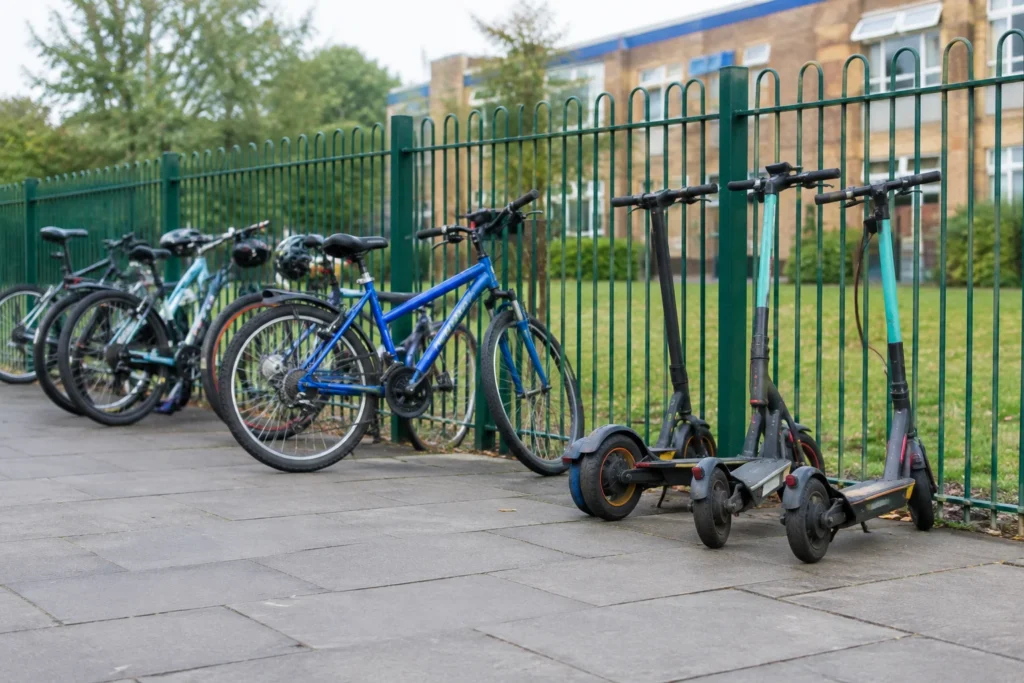
Bolton Council has announced Kearsley West Primary School’s active travel accreditation, recognising cycle training and pupil route inspections. The achievement connects with the published School Streets arrangements on Primrose Street.
Recognition for more active school journeys
Kearsley West Primary School has received Bolton’s first school active travel accreditation, Bolton Council announced on 20 October 2026. Kearsley West’s accreditation recognises work encouraging walking, cycling and wheeling, including Bikeability classes and pupil inspections of nearby routes. The school also participates in Bolton’s School Streets programme.
Kearsley West receives Bolton’s first school active travel accreditation
In its announcement of the school’s recognition, Bolton Council described Kearsley West as the first school in the area to receive Modeshift STAR accreditation. The recognition relates to work across the school community, rather than one lesson, inspection or road restriction.
Headteacher Jackie Fitton accepted the award from the Mayor of Bolton, Cllr Mohammed Iqbal. Councillors Roger Pedley, Sylvia Crossley, Debbie Newall and Jackie Schofield also attended the presentation.
The announcement date is not necessarily the presentation date or the accreditation decision date. The council’s account does not establish either date or identify the accreditation tier awarded.
The local announcement uses the name Modeshift STAR. The national education programme is called Modeshift STARS Education and recognises schools supporting active and sustainable travel.
How Bikeability develops playground and road skills

The council reports that Kearsley West introduced Level One and Level Two Bikeability classes as part of the work supporting its active travel accreditation. These levels address different environments, moving from cycle control away from traffic towards riding on roads.
National Bikeability Level 1 guidance places initial training in a traffic-free setting, normally a school playground. Children learn to check their cycle and helmet, set off, pedal, slow down and stop. Other skills include looking behind and manoeuvring around obstacles while maintaining control.
The programme commonly reaches children in Years 3 or 4, but recognises that riders develop at different rates. Its purpose is to develop handling skills, not to recreate road traffic on a playground.
Level 2 training takes children onto quiet roads with an instructor. The public programme guidance describes starting and stopping, passing parked vehicles, understanding signs and road markings, negotiating junctions and sharing the road with other vehicles.
Pupils inspect the routes around their school
Pupil participation also contributed to Kearsley West’s accreditation. Children carried out an Active Travel Inspection of nearby streets and routes, identifying features that supported their journeys and places where improvements might help.
Their observations were shared with the school and council to inform potential future neighbourhood changes. This gives children a way to contribute their everyday experience, but the announcement does not identify completed improvements resulting from their feedback.
Modeshift’s national Active Travel Inspectors framework is primarily designed for Key Stage 2 pupils aged seven to eleven. With staff support, children examine what helps or limits active journeys and discuss possible improvements together.
The framework looks beyond traffic alone. It covers school grounds, road crossings, pavements, motorised traffic, green space and nature. It also considers places to explore and the sounds and smells experienced around the school.
Pupils rate features Good, OK or Bad. Combined ratings reflect their perceptions of how active, attractive and accessible the neighbourhood feels. They are not engineering assessments, collision statistics or measurements of pollution.
National resources include classroom slides, a teacher activity booklet and pupil observation sheets. Schools are encouraged to record findings in STARS for sharing with their local authority, and downloadable participation certificates are available. These resources explain the wider approach; they do not establish which materials Kearsley West used.
How the Primrose Street restriction works
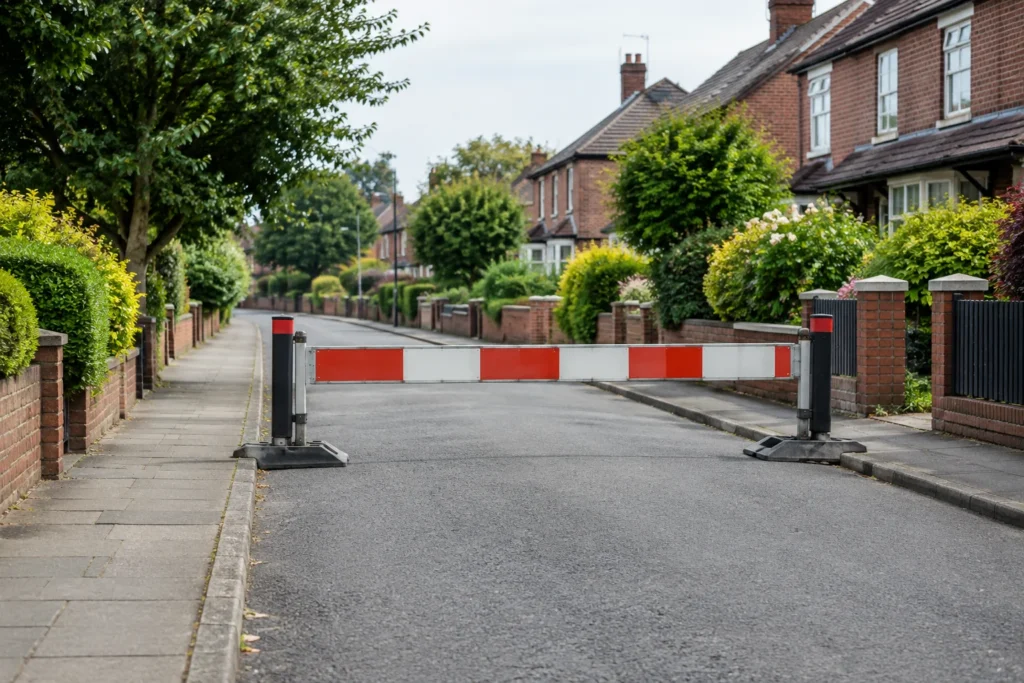
The council’s published arrangements list Kearsley West’s School Street on Primrose Street. The stated start date is 5 May 2026, with controlled access from 3 pm to 3.45 pm, Monday to Friday during term time.
That schedule describes an afternoon restriction only. It should not be read as an all-day closure or as evidence of a matching morning restriction.
According to the council’s School Streets information, temporary barriers are managed by school staff or volunteers. Signs identify the restrictions, and vehicles permitted to enter must travel at walking speed.
The council identifies road safety, reduced pollution, active travel and a more pleasant community environment as the scheme’s objectives. These are intended benefits, not measured outcomes established for Primrose Street by the accreditation announcement.
The service page retains an “Upcoming” heading despite showing start dates earlier in 2026. Its entries therefore provide the published timetable, rather than independent confirmation of operation on every school day.
Essential access and school-managed exemptions
School Streets retain arrangements for essential access. The council’s detailed exemption guidance identifies residents with exemption permits, emergency services, Blue Badge holders and school staff requiring access for work.
Participating schools manage exemptions, normally under the headteacher’s oversight. Where approval is granted, schools collect and verify relevant evidence, such as residency details and vehicle registrations. Being a resident, visitor or worker should not be treated as automatic permission to enter.
The guidance gives disabled pupils needing direct entrance drop-off as an example of a genuine access requirement. It directs residents who need vehicle access during restricted hours to their school to discuss a permit.
For non-exempt car drop-offs, the council advises parking outside the restricted area and walking the remaining distance. It also asks residents to minimise vehicle movements and arrange visitors or deliveries outside operating times where possible.
Bolton’s wider School Streets timetable
The council reports that School Streets trial days took place in March 2026. The announcement of Kearsley West’s accreditation refers to four pioneering schools, while the service page lists five.
The published information does not explain that difference. It does not support an assumption that the fifth school joined after the October announcement: all five listed start dates fall between May and September 2026.
The different operating windows matter. Kearsley West and Sharples each have one published daily restriction, while the other three schools have morning and afternoon windows. The table records individual schedules, not a common timetable for every participating school.
The travel-plan approach behind Modeshift STARS accreditation
Modeshift STARS accreditation sits within a national approach to improving journeys through planning, delivery and monitoring. Modeshift STARS Education launched in 2008 and is supported by the Department for Transport. It recognises educational establishments supporting walking, cycling and other sustainable and active travel.
Modeshift defines a travel plan as a package of measures intended to reduce car use to and from a site. Research and consultation with the people using that site provide its foundation. The approach applies to education, business and community settings.
A site audit records existing and proposed transport links alongside relevant organisational policies. Travel surveys explore current journeys, preferred ways of travelling and users’ views about available transport options. This separates how people currently travel from how they would prefer to travel.
The framework connects identified problems with aims, objectives and measurable targets. An action plan sets out activities, while monitoring explains how progress will be assessed. Modeshift emphasises a connected thread that makes the plan understandable to someone unfamiliar with the site.
The council has not published school travel survey figures, inspection scores, collision reductions or measured air-quality changes in its announcement.
STARS helps organisations create, deliver and track travel plans towards accreditation. Its national school travel awards are a separate recognition programme, bringing schools, local authorities and partners together in autumn and spring.
For Kearsley West, the confirmed achievement is active travel accreditation supported by cycle training, pupil route feedback and wider sustainable-travel work. The published Primrose Street arrangements provide practical local context, while any future neighbourhood changes remain distinct from the recognition already received.
Sources
- Bolton primary school gets active for accreditation – Bolton Council
- School Streets in Bolton – Bolton Council
- School Streets in Bolton – Bolton Council
- Modeshift STARS Education – Delivery of Effective Travel Plans
- Active Travel Inspectors – Modeshift
- What is a Travel Plan – Modeshift
- www.bikeability.org.uk
- Bikeability Level 2: on-road cycle training