
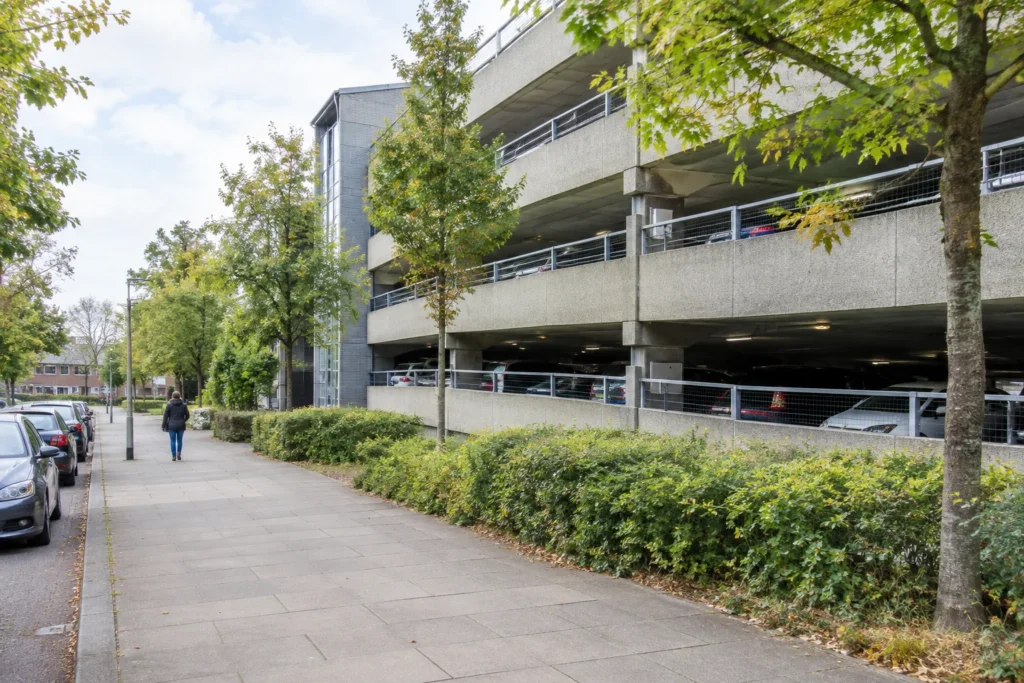
Prestwich’s Travel Hub was forecast to open in autumn 2026. Council and partnership updates explain its parking provision, proposed charges and wider regeneration role. An exact opening date and final tariffs remain unverified.
Opening forecast and the wider development
Prestwich’s Travel Hub was expected to open in autumn 2026, following final handover and operational preparations, Bury Council announced on 7 October. It is the first component of the wider village-centre regeneration. As checked on 24 October 2026, an exact public opening date and final approved parking tariffs had not been verified.
Autumn opening preparations follow the construction milestones
The council’s 7 October opening announcement described the Travel Hub as the first completed phase of the village regeneration. Its autumn forecast depended on the remaining handover and operational work. Completing a building does not itself establish when drivers and cyclists can begin using it.
An earlier milestone came on 2 February 2026, when regeneration partner Muse reported that the £14 million building had reached its highest point. Bury Council and VINCI Building participated in the construction milestone. Muse described a three-storey hub with more than 300 parking spaces, accessible bays, electric-vehicle charging and extensive cycle storage.
The February construction update expected completion during 2026. Reaching the highest point marked progress on the structure; it was not a Travel Hub opening announcement or confirmation that the facilities were operational.
The timetable has changed since the project’s launch. In November 2024, the council scheduled ground investigations from 4 December, ahead of main construction the following year. At that stage, it anticipated opening from May 2026.
Parking, accessible bays and cycle storage at Fairfax Road
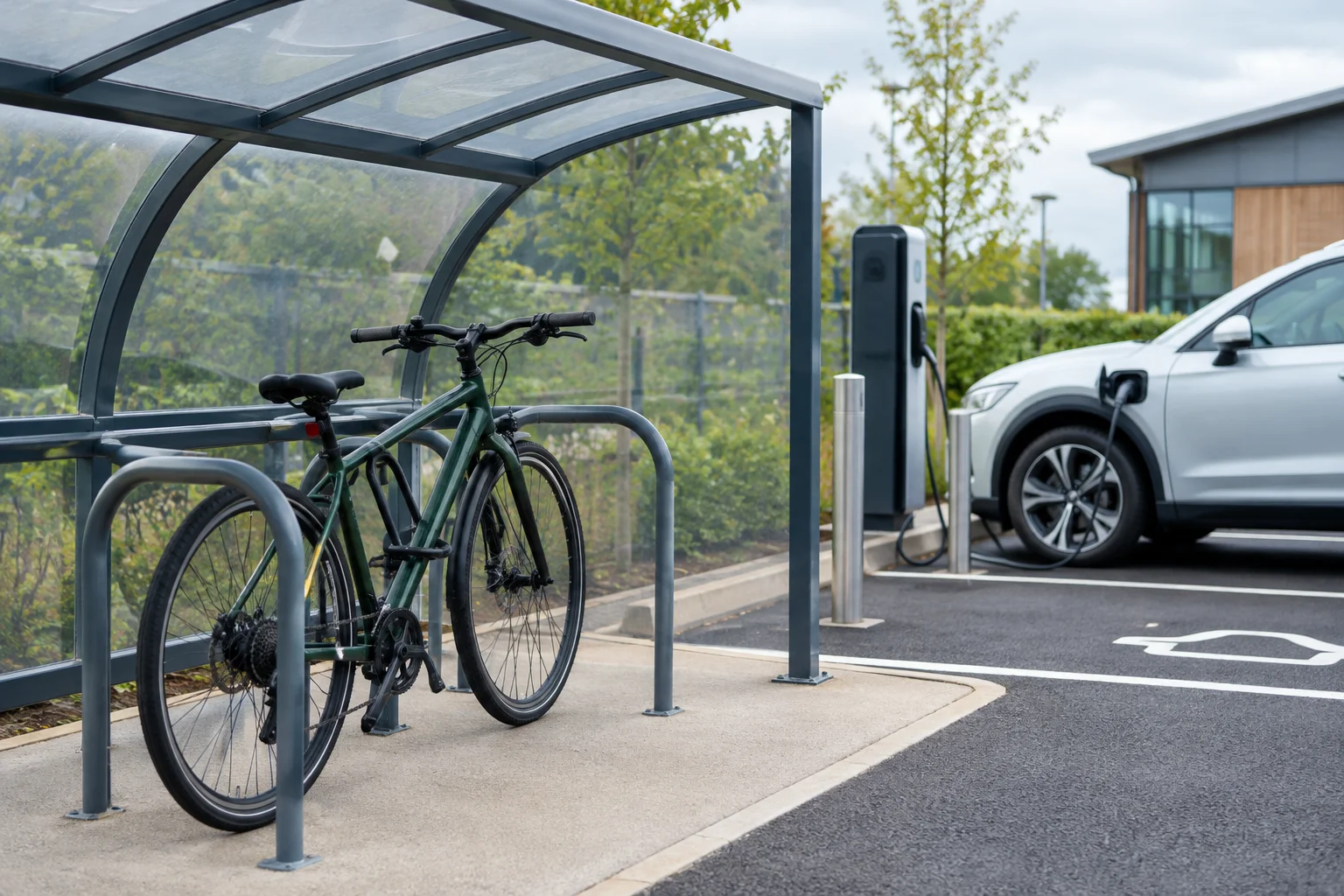
The regeneration partnership’s parking and development information describes the Travel Hub as replacing the former Fairfax Road car park. It specifies 301 vehicle spaces, rather than using only the rounded figure of more than 300 in the construction announcement.
That total comprises 254 standard spaces, 30 electric bays, one electric accessible bay, 14 other accessible bays and two car-club bays. The electric accessible space is separate from the other 14 accessible spaces, but all are already included within the 301 total.
The partnership also specifies 76 cycle-storage spaces. It describes the car-club bays as intended for users to hire and return a vehicle at the hub. As checked on 24 October 2026, that description did not confirm a live car-club service, a provider or booking arrangements.
A second figure refers to the wider development, not just Travel Hub parking. The partnership’s revised account provides 347 parking spaces overall: 301 in the hub and another 46 on-street or elsewhere within the development. Those additional spaces include 20 accessible spaces.
Keeping these totals separate avoids presenting all 347 spaces as capacity inside the building. It also distinguishes the hub’s provision from parking associated with later parts of the scheme.
The partnership says demand was assessed using actual usage of the car parks that previously served the site, following the approach used for the original permission. It also states that residential parking provision remains at 42% in its proposals. These are the partnership’s planning assumptions, rather than evidence of how the completed development will perform or whether future demand will be met.
Council ownership and APCOA’s operating role
Bury Council will own the Travel Hub and APCOA will operate it, according to arrangements checked on 24 October 2026. The October announcement describes cashless payment, automatic number-plate recognition, CCTV, staffing during key hours, barriers and roller shutters.
Automatic number-plate recognition uses cameras to read vehicle registration plates. The council’s description establishes the intended operating approach, but does not identify every payment channel or give a complete staffing timetable. Staffing during key hours should not be read as continuous attendance.
The operator appointment record separates three dates. On 11 March 2026, Cabinet approved delegated authority to appoint a third-party operator. The Executive Director of Operations then made the APCOA appointment decision on 14 August. That decision was published on 7 October.
The register records the appointment’s status as “Recommendations Approved”. The October publication date is therefore not the date on which the appointment decision was made.
The spring procurement report adds the earlier selection process. It describes soft market testing followed by a competitive tender through the Crown Commercial Service Framework, beginning on 26 January 2026. Mobilisation was intended to take place before opening.
The proposed tariffs and the council’s cost-recovery case
The Travel Hub prices published by the council on 7 October were proposals. The 14 October Cabinet agenda listed the operations strategy as item 19. That meeting had passed by this article’s 24 October check, but the agenda alone does not establish the final tariff decision.
The proposed parking schedule was:
Other proposals included free parking from 6pm to midnight, a £1.50 Sunday charge and £60 monthly season tickets. Electric-vehicle charging was proposed at 64p per kilowatt-hour, the unit used to measure electricity consumption. Cycle storage was proposed at £1 per entry.
These figures describe the package put forward, not verified current prices. The published duration bands are retained as stated, without assuming how any boundary between them would be applied.
The council’s stated rationale was operational cost recovery. It estimated an annual cost of £300,000 without parking charges. That is a forecast used to explain the charging proposal, rather than an audited result from an operating facility.
The council also proposed monitoring usage and bringing a further report to Cabinet six months after implementation. That review period runs from implementation, not automatically from the October announcement or meeting. For residents and businesses, the unresolved point is the final approved charging arrangement: the initial proposals explain the council’s approach, but do not settle what users will pay.
How the Travel Hub unlocks the next regeneration phases
The Travel Hub is Phase 1A of the council’s regeneration structure. Phase 1B covers retail, market, library and community facilities. Phase 2 comprises 248 proposed homes. This separates the parking building from the much broader redevelopment still to follow.
The land-use sequence explains why parking comes first. Consolidating spaces in the hub makes Rectory Lane land available for redevelopment. In its November 2024 announcement, the council said constructing the hub first would allow the Longfield Centre surface car park to facilitate delivery of the village masterplan.
The spring procurement report records submission of the next-phase planning application on 27 February 2026, following further consultation. It describes a combined environmental-impact-assessment submission for Phases 1B and 2, building on earlier full and outline permissions.
Submission is a step in the planning process, not evidence that the revised application received permission. The report also distinguishes preparatory procurement from a main building contract.
It linked funding progression to three milestones: a planning submission, selection of a contractor through a pre-construction services agreement, and a meaningful start on demolition. Such an agreement brings contractor input into design, buildability and costs before the main construction stage. It does not, by itself, establish an award of the main building contract.
Muse’s February announcement reported £6.8 million secured from the Greater Manchester Combined Authority to support the next phase. It described the wider regeneration as a programme worth more than £100 million. Both figures belong to that dated account, rather than a newly confirmed total for October.
The planned library, market and village public spaces
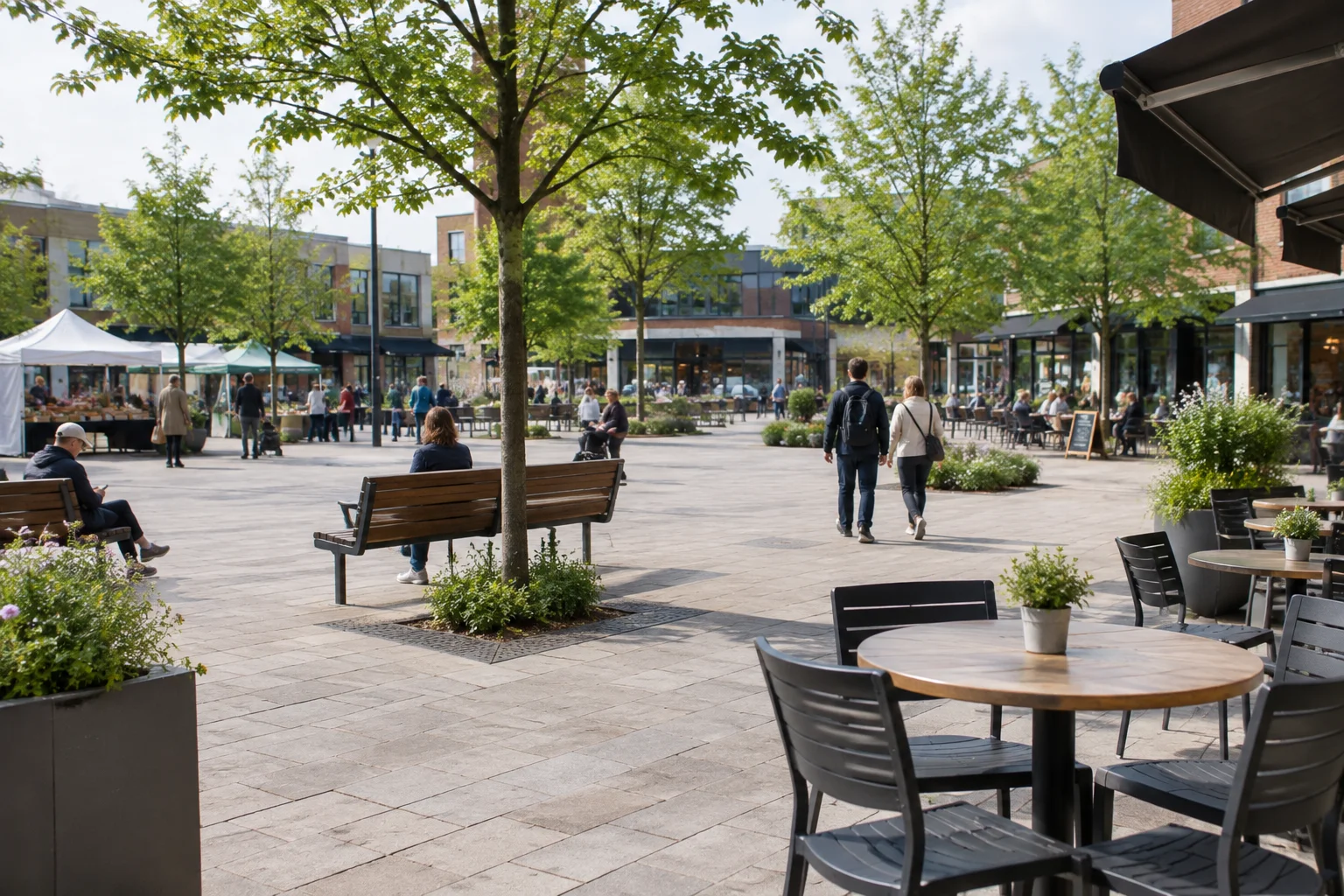
The partnership’s revised proposals combine the homes with a Market Hall, flexible retail space, an enlarged village square and a community library within the retail hub. A separate plot is safeguarded for a possible future NHS health centre.
Safeguarding keeps land available for that possible use. It does not establish NHS funding or a delivery timetable. Likewise, the revised library location should be distinguished from descriptions of earlier versions of the scheme.
The council’s November 2024 account of the regeneration provides historical design context. Describing the scheme approved in July that year, it outlined an adaptable square accommodating uses such as pop-up markets, food festivals, art exhibitions and live performances.
The earlier market concept included spaces for smaller retailers and food operators, with communal seating extending towards the square. Flexible retail and leisure units were intended to complement the existing high street. Landscaping, trees, seating, public art and improvements to the arrival from the tram also featured in that account.
Those details explain the ambitions beyond parking, but they are design intentions rather than a confirmed events programme or list of operators. They should not be assumed to remain unchanged in every part of the revised proposals.
Related local reading
Sources
- Prestwich regeneration reaches major milestone with Travel Hub to open | Bury Council
- Prestwich travel hub celebrates reaching its highest point – Muse
- yourprestwich.com
- Decision – Prestwich Village Regeneration Project: Appointment of APCOA Parking (UK) Limited as operator of the Prestwich Travel Hub
- Agenda for Cabinet on Wednesday, 14th October, 2026, 6.00 pm
- councildecisions.bury.gov.uk
- Prestwich Village regeneration kick-starts with construction of Travel Hub | Bury Council