

Bury Council announced the launch of its new SEND Local Offer website on 20 October 2026. The launch forms part of a wider improvement programme across education, health and social care.
New information hub within wider reform
Bury Council announced on 20 October 2026 that its new SEND Local Offer website had officially launched at the borough’s annual SEND and Inclusion Conference. The council says the Bury SEND website brings information, advice and services together for families, young people and professionals. It places the launch within a wider improvement programme across education, health and social care.
SEND means special educational needs and disabilities. The announcement describes a milestone in making support easier to find and understand, rather than the completion of service reform.
SEND Local Offer launched at Bury’s inclusion conference
The conference brought together headteachers, special educational needs co-ordinators, education professionals and borough partners. Keynote and interactive sessions covered inclusive practice, partnership working and cultural change, alongside reflection on improvement and the next phase of work.
The council’s launch announcement was published on 20 October. It does not give the conference’s exact date. That distinction matters when placing the event within the borough’s improvement timeline.
Wendy Young, Head of SEND and Inclusion, linked the launch to a three-year improvement and reform programme. Its scope spans education, health and social care, rather than school provision alone.
Cabinet member Sandra Walmsley thanked schools, families and partners. She also acknowledged Beebot AI’s support in developing the website.
The improvement timeline from inspection to launch
The council traces its improvement programme to the February 2024 local area SEND inspection. Its account says stakeholders, including parent carer forum Bury2Gether, co-produced a Priority Impact Plan. It says Ofsted and the Care Quality Commission subsequently approved that plan.
Inspection dates and publication dates are different. Ofsted’s report index for Bury records publication of the full inspection report on 7 May 2024. The later monitoring visit took place from 9 to 11 March 2026, with its report published on 29 June 2026.
According to Bury Council, the monitoring report confirmed effective action in all six Priority Impact Plan areas. That conclusion is attributed to the council’s published account; it should not be read as confirmation that every family’s difficulties have ended.
The council also describes a graduated approach: identify needs early, put support in place promptly, then review and adapt it. This is an ongoing process, not a single intervention.
How children and families are meant to shape services

The SEND Improvement and Assurance Board approved Bury’s 2025–2028 strategic vision in September 2025. The document credits co-production involving children and young people, Bury2Gether, NHS Greater Manchester and Bury Council. Its foreword also identifies Changemakers and Bury Youth Service.
Co-production means involving people affected by services in shaping them. The strategy’s commitments include understandable information, honest relationships with professionals and appropriately trained staff.
It also sets expectations for participation. Partners should engage representative groups, explain constraints, maintain communication and show participants how their feedback has influenced decisions. Those commitments go beyond asking for views: they include explaining what happens afterwards.
The document was marked for review in September 2026.
Transport, carers and community activities in the strategy
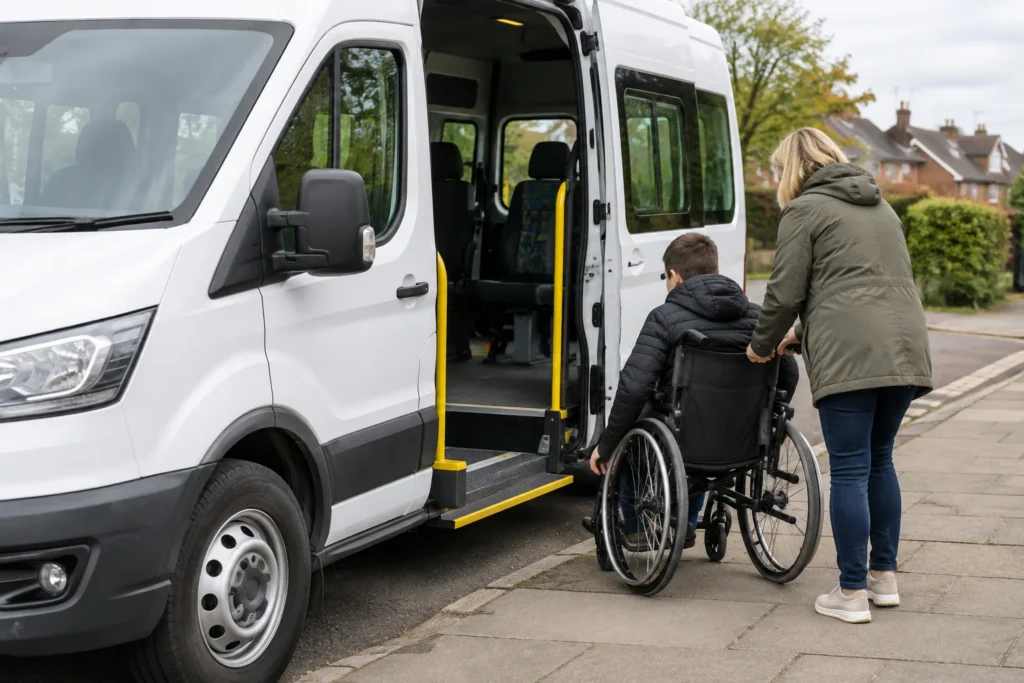
The strategy covers practical issues beyond information provision. Its transport priorities include clearer guidance on options, tackling staffing-related cancellations and confirming arrangements earlier alongside school transfers. It also seeks a stronger offer for young people aged 16 and over.
Other commitments concern support for sibling carers and families at diagnosis. The document calls for clearer routes to social care, health and financial support, reflecting the range of organisations families may need to contact.
Community participation is another theme. Priorities include accessible Holiday Activities and Food provision, social opportunities after 16, accessible local spaces, short breaks, and before- and after-school clubs.
How the Priority Impact Plan measures improvement
The Priority Impact Plan describes the February 2024 inspection as identifying widespread, systemic failings. Its response combines six priority actions with three additional improvement areas.
Those additional areas cover communication; alternative provision and education otherwise than at school; and workforce development across the partnership. The distinction matters: the six priorities do not represent every strand of the improvement programme.
The plan sets out shared oversight through the SEND Improvement and Assurance Board. Accountability connects to the council’s Cabinet and Greater Manchester Integrated Care Board arrangements. It specifies monthly lead-officer reporting and risk review, alongside six-monthly reporting by the independent chair.
Its proposed measures extend well beyond website visitor numbers. They include attainment, attendance, suspensions, exclusions, complaints and family feedback. Local Offer visitor and page-use indicators sit alongside these wider measures, rather than replacing them.
Further indicators concern health waiting lists and support while waiting. They also cover education and training among 16- and 17-year-olds with education, health and care plans, often called EHCPs.
Transition experiences, timely plans and amended annual reviews are included too. Communication measures seek feedback on the Local Offer, confidence in the partnership and understanding of transport support.
These are proposed ways to assess impact, not published results demonstrating that each target has been met. The plan also seeks evidence that families understand the strategy and experience a positive difference from services. That separates activity, such as publishing information, from the changes people experience.
What the July 2025 stocktake established
A joint Department for Education and NHS England letter, dated 10 July 2025, reviewed a stocktake held on 1 July. It recorded encouraging implementation progress and improving partnership relationships.
However, reviewers also called for stronger evidence of tangible impact, rather than relying principally on plans and actions. That distinction provides context for assessing the later website launch.
Communication developments recorded in July 2025 included more frequent SEND Local Offer updates and feedback mechanisms. The letter also described a reviewed Local Offer, a schools toolkit being rolled out, redesigned inclusion services using communities of practice, and a dedicated SEND health visiting service.
Reviewers noted stronger timeliness for phase-transfer reviews and better engagement with annual reviews. They also identified continuing needs around workforce capacity, consistent skills and robust partnership data.
Wider engagement with children and families remained important so that participation could influence service design. This connected the practical improvement work with the partnership’s co-production ambitions.
On health, the stocktake recorded community paediatric waiting-time challenges and work towards a neurodevelopmental hub. Next steps included clearer information about support while waiting, continued work on autism and ADHD assessment waits, and better measurement of waiting times and interim support.
These findings describe the position recorded in July 2025. They are historical evidence of progress and outstanding work, not confirmation of service conditions at the October 2026 launch.
What the July 2026 board recorded before the launch
The board minutes from 14 July 2026 show communication remained a priority before the Bury SEND website launch. They recorded Beebot work progressing and referred to an incoming SEND communications and engagement officer.
A parent carer forum representative raised difficulties in communication between services and families, alongside requests for earlier event notification. Those concerns help explain why information and engagement remained active improvement subjects.
Changemakers discussed college, volunteering, supported internships, interview preparation and friendships. Their recorded activity included an easy-read Short Breaks Duty Statement, work on an NHS SEND handbook and a school survival guide, and engagement with decision-makers.
Voice-mapping responses covered 16 of 17 secondary schools. Further work was needed among primary schools, alternative provision and electively home-educated children. A draft co-production charter had been trialled in transport, personal-budget and local inclusion work, but remained under refinement.
The board also recorded progress in early identification, educational psychology capacity, transition planning and education, health and care plan quality assurance. Alongside that progress, it noted long autism and ADHD diagnostic waits, inconsistent transition experiences and an annual-review backlog.
The October announcement establishes the SEND Local Offer launch as a completed milestone. The wider record describes continuing reform, with both progress and unresolved difficulties. For the council’s published account and supporting documents, read its improvement journey information.
Sources
- Bury brings partners together to shape the next phase of the SEND improvement and Reform Plan at this year’s annual SEND and Inclusion Conference 2026 | Bury Council
- Bury’s Improvement Journey Information – Bury Council
- Bury SEND Strategic Vision 2025-2028
- Bury Metropolitan Borough Council – Open – Find an Inspection Report – Ofsted
- Ofsted report document for Bury
- Bury Priority Impact Plan FINAL without names
- DfE and NHS England stocktake letter — July 2025
- SEND Improvement and Assurance Board minutes — 14 July 2026